The Dinosaur King: The Audi Q7 V12 TDI quattro
When Ingolstadt decided that 1,000Nm of torque in a seven-seat SUV was a reasonable engineering proposition

The Impossible Made Inevitable
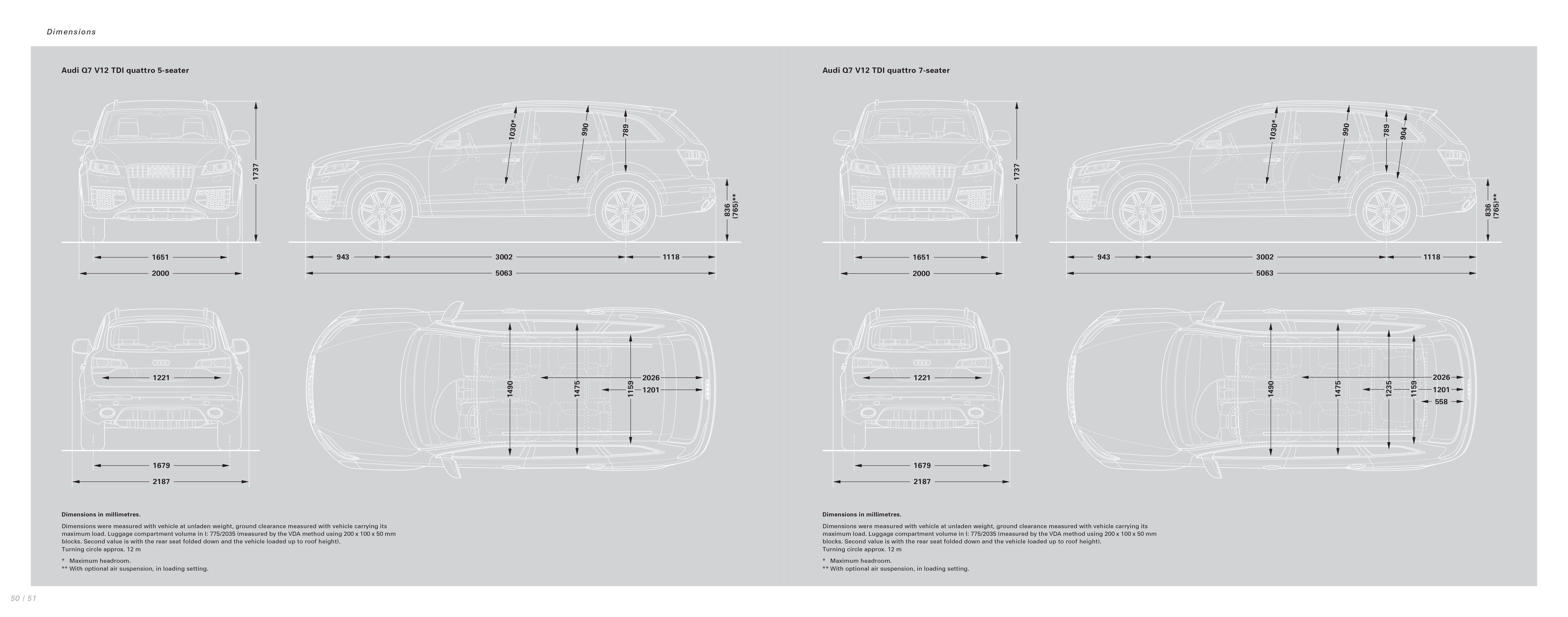
The premise borders on the absurd: take a V12 diesel engine (the first of its kind ever fitted to a production passenger vehicle) and install it into a seven-seat luxury SUV. Not a sports car. Not a grand tourer. A family hauler with three rows of leather and enough boot space for a week’s skiing equipment. Then price it at nearly £100,000 and watch as approximately 44 to 50 UK buyers sign the papers, fully aware they’re purchasing automotive mythology rather than mere transportation.
This is not a vehicle. This is a statement of intent wrapped in Daytona Grey paint.
Law of Nature No. 1: All Organisms Descend From Common Ancestors
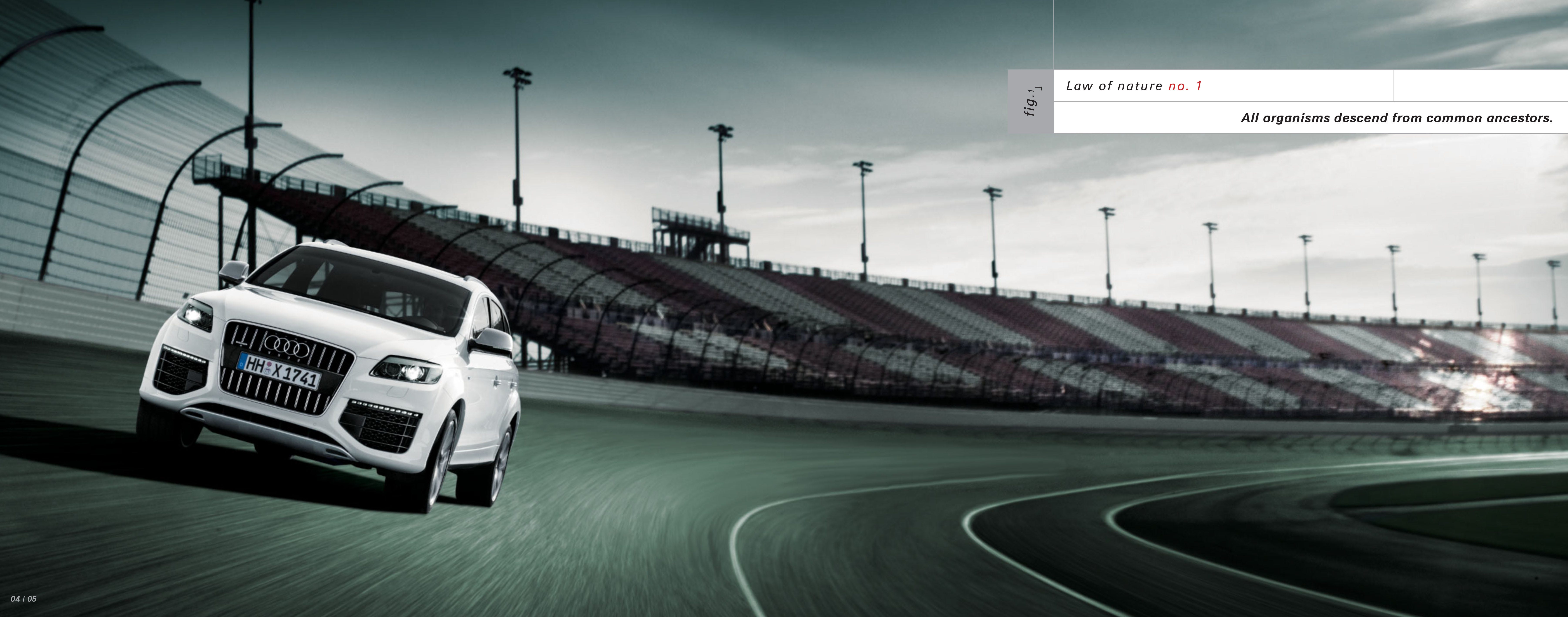
The brochure opens with what can only be described as automotive Darwinism. Page 4 presents the Q7 on a banked racetrack, clouds gathering overhead, the typography cold and clinical: “Law of nature no. 1: All organisms descend from common ancestors.”
This is not marketing hyperbole. This is Audi declaring biological lineage. The Q7 V12 TDI descends directly from the R10 TDI, the diesel-powered prototype that won Le Mans three consecutive times from 2006 to 2008. The same fundamental philosophy (turbocharged diesel torque weaponised for performance) flows through both machines. One conquered endurance racing. The other was built to conquer the school run whilst doing 155mph between traffic lights if absolutely necessary.
The visual language reinforces this ancestry. Heavy desaturation. Monochromatic tones. Expensive white space isolating technical components like specimens under laboratory glass. This is not a brochure trying to sell you comfort or prestige. This is a technical document proving that diesel supremacy extends beyond the racetrack.
Law of Nature No. 2: Strong Species Always Continue to Evolve
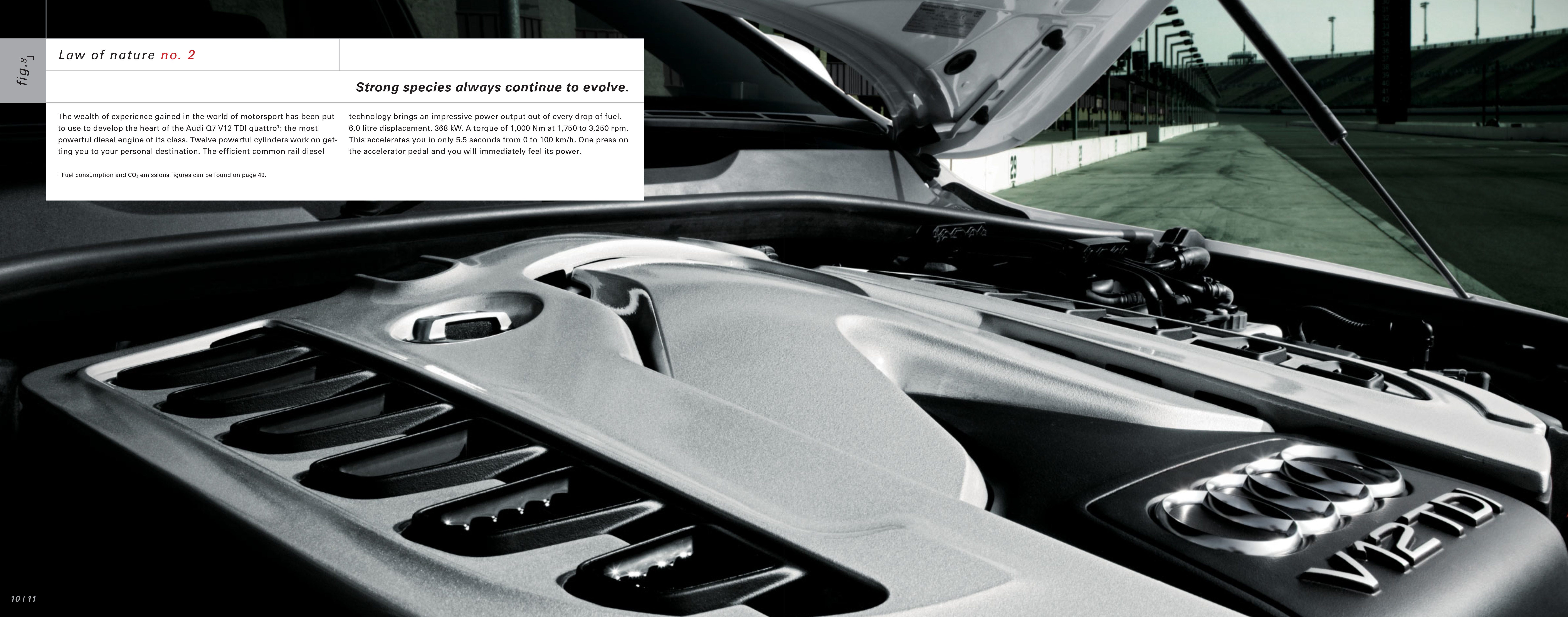
Page 10 delivers the engine in extreme close-up: carbon-fibre-styled intake manifolds, twelve cylinders arranged in a 60-degree V configuration, 48 valves ready to inhale and combust. The copy is blunt: “Strong species always continue to evolve... Twelve powerful cylinders work on getting you to your personal destination.”
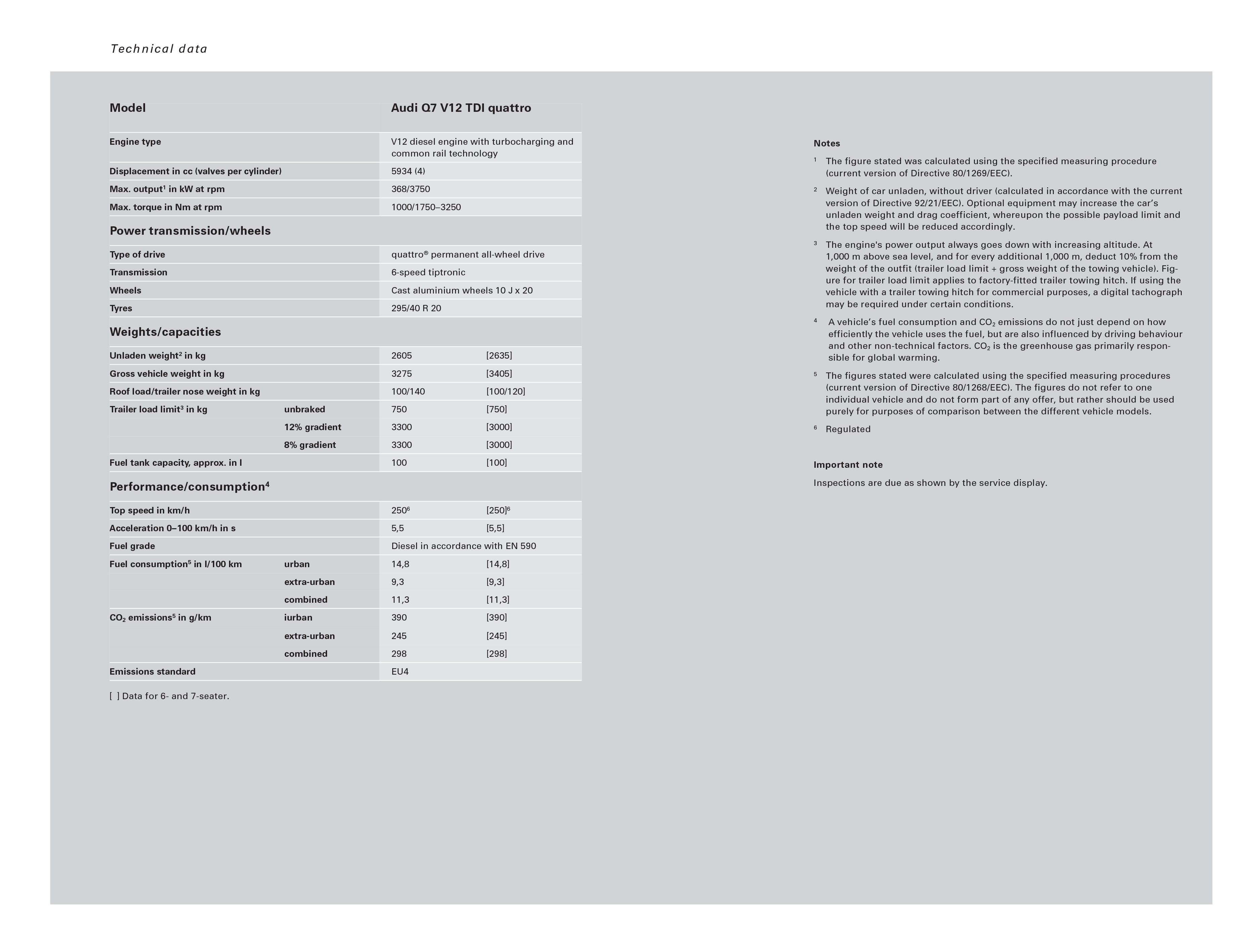
The specifications read like a typo:
5,934cc of displacement (equivalent to two 3.0L V6 TDI blocks welded into a single unit)
493bhp at 3,750rpm (a specific output of 83.1bhp per litre from a diesel)
1,000Nm (738lb ft) of torque available from 1,750 to 3,250rpm
That torque figure deserves emphasis. Seven hundred and thirty-eight pound-feet. Available almost instantly from idle. Delivered through a specially reinforced 6-speed tiptronic transmission, the only gearbox in existence at the time capable of surviving such force without grenading itself across three counties.
The result? 0-62mph in 5.5 seconds. From a 2.6-tonne SUV. With seven seats and a diesel engine that could theoretically run for 500,000 miles if maintained properly. Physics-defying doesn’t quite cover it. This is physics redefined.
Terrain as Irrelevance
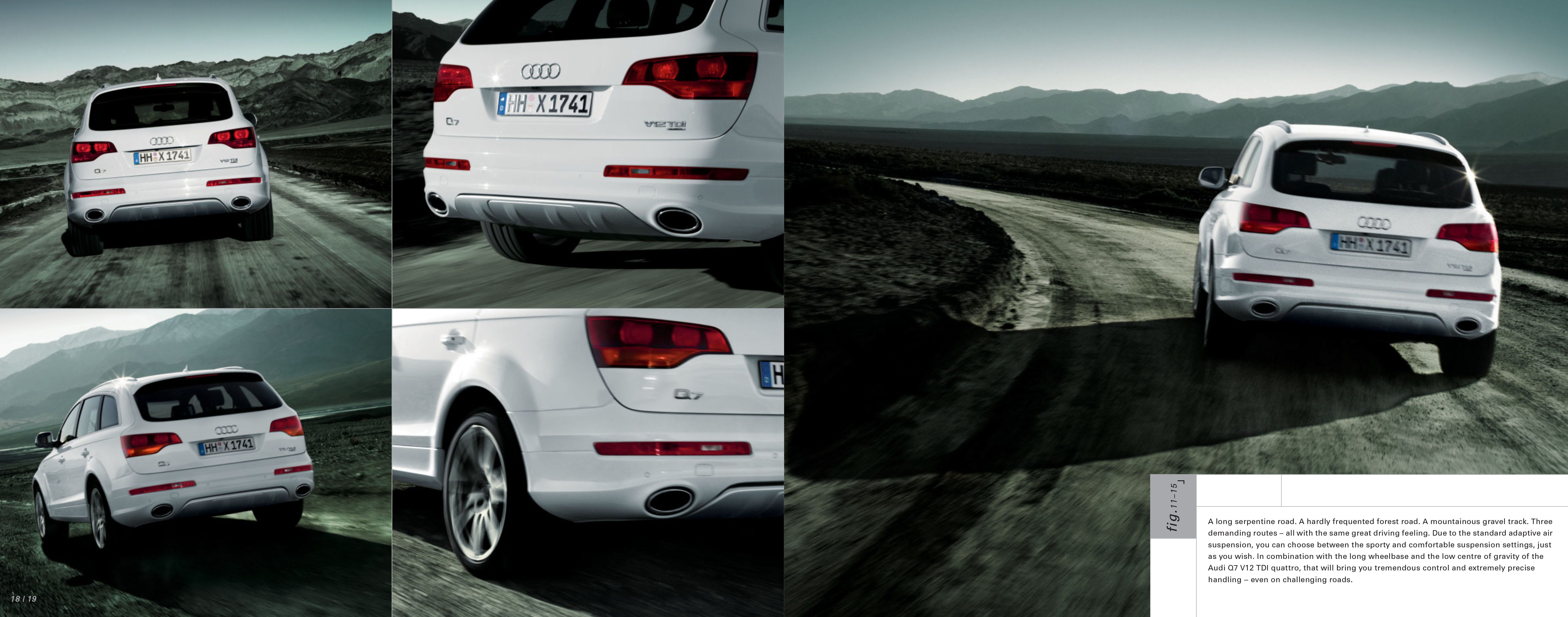
Pages 18-19 present five images: the Q7 on tarmac, gravel, forest track, mountain pass, serpentine road. The message is elegantly brutal: “Tremendous control and extremely precise handling.”
With 1,000Nm at your right foot’s command, terrain ceases to be a variable. Mud, snow, loose gravel, wet cobblestones, all become equally meaningless. The quattro all-wheel-drive system and adaptive air suspension don’t so much conquer surfaces as ignore them. You point the Q7 in a direction, and it arrives, regardless of what lies between here and there.
This is not off-road capability in the traditional sense. This is the automotive equivalent of a steamroller: unstoppable momentum delivered with surgical precision.
The Command Centre
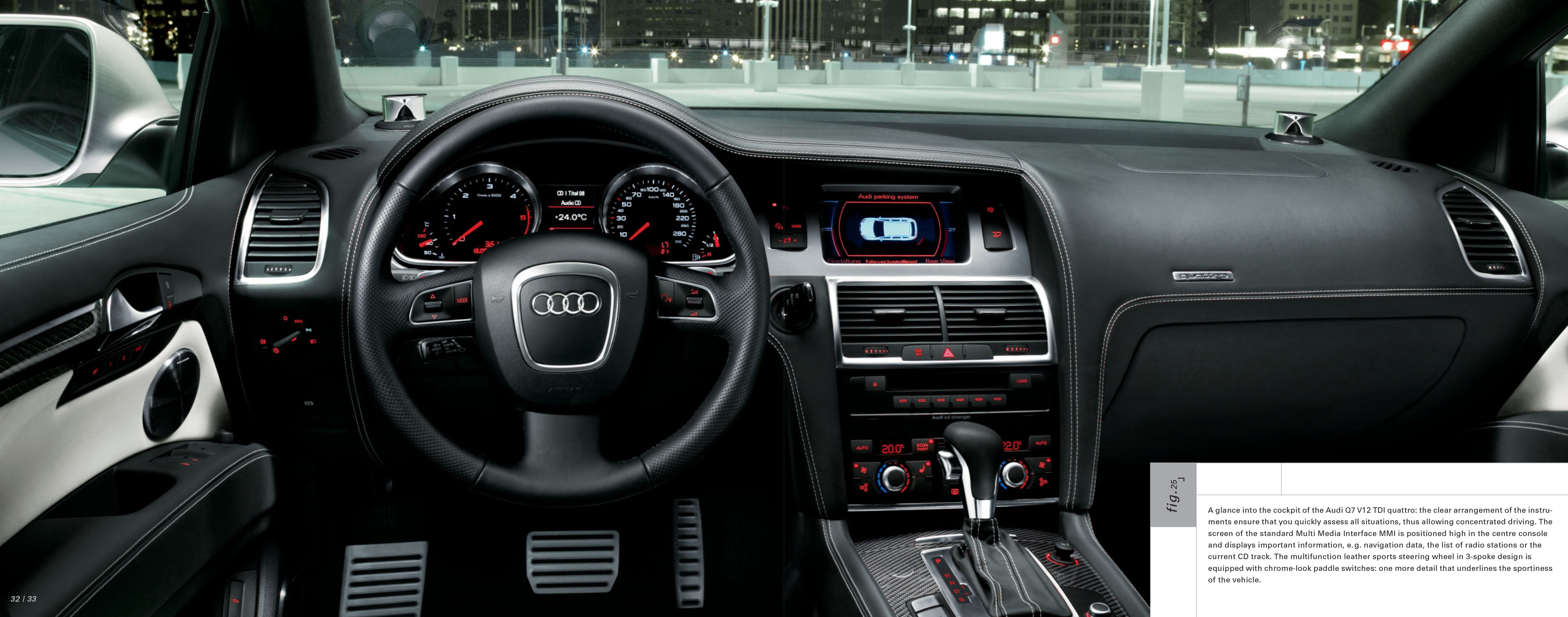
Page 32 shifts focus to the cockpit. High-contrast photography isolates the MMI interface, the instrument cluster, the ergonomic precision of every control. The copy frames operation not as driving but as “concentrated driving”, a term borrowed from motorsport, not suburban motoring.
This framing is deliberate. You do not simply drive a 493bhp, 2.6-tonne diesel V12. You command it. The MMI system (Multi Media Interface) ensures “you quickly assess all situations,” because when 1,000Nm of torque is one throttle twitch away, situation assessment becomes a survival skill.
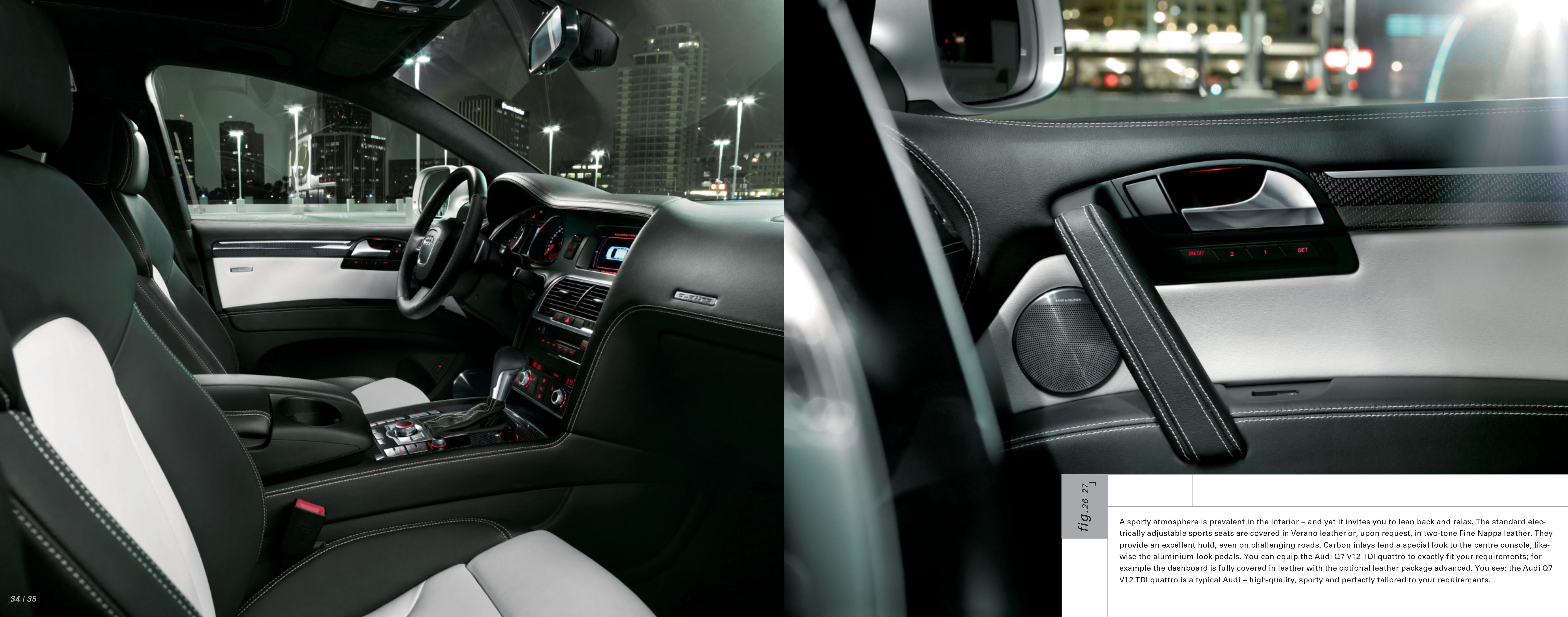
Carbon inlays line the transmission tunnel. Aluminium pedals catch the light. The sports seats (finished in Valcona leather) provide both lateral support for spirited cornering and enough comfort for transcontinental runs. The brochure describes this as paradox: “A sporty atmosphere is prevalent in the interior and yet it invites you to lean back and relax.”
Translation: You can pin the throttle through the Nürburgring Nordschleife on Sunday morning, then collect the family and drive to Tuscany without discomfort. Both scenarios are equally plausible. Both are fully supported by the engineering.
Market Positioning: The Halo That Burnt Too Bright
Priced at nearly £100,000, the Q7 V12 TDI occupied a strange middle ground between luxury and lunacy. It competed with the Porsche Cayenne Turbo and Range Rover Sport, but neither offered a 12-cylinder diesel option. Nothing did. Nothing could.
This was Audi’s ultimate Vorsprung durch Technik halo vehicle: proof that German engineering could achieve the seemingly impossible, even if commercial viability was never the point. Approximately 44 to 50 units reached UK soil. Globally, production remained in the low hundreds. This was never meant to be a volume seller. This was a flag planted at the peak of diesel development, visible from orbit.
The Rearview Mirror
The Problem
The 2015 diesel emissions scandal (Dieselgate) detonated beneath the entire industry, but it cratered Audi’s diesel reputation with particular venom. Today, diesel passenger vehicles face considerable headwinds: Low Emission Zone restrictions in major cities, shifting public perception and the inexorable march toward electrification. The Q7 V12 TDI, once the pinnacle of diesel sophistication, now represents a different era entirely.
More practically: servicing this vehicle has become a specialist’s nightmare. Very few Audi dealerships retain the knowledge or tooling to work on the bespoke V12 block. Independent specialists charge premium rates for the privilege. Common issues (air suspension failure, ceramic brake wear, turbocharger degradation) are exacerbated by the 2.6-tonne kerb weight. Parts availability ranges from difficult to unobtainable.
The Success
Despite (or perhaps because of) its impracticality, the Q7 V12 TDI has achieved something remarkable: immortality through extremity.
It remains the world’s only series-production V12 diesel passenger car. That 1,000Nm torque figure stands as a benchmark for internal combustion performance that even modern electric drivetrains struggle to match for sheer instantaneous response. Collectors actively hunt for surviving examples, recognising them as the final, glorious excess of the diesel era: the moment before reality reasserted itself.
In automotive terms, this is a dinosaur. But what a magnificent dinosaur it was.
The Verdict
The Audi Q7 V12 TDI quattro was not built because it made sense. It was built because Audi could build it, and because the engineers at Ingolstadt wanted to prove that diesel technology deserved the same reverence as petrol exotics. They succeeded.
You look at this vehicle now (through the lens of electrification, emissions regulations, and shifting cultural values) and it feels like an artefact from an alternate timeline. A timeline where diesel supremacy continued unabated. Where 1,000Nm and 24.8mpg coexisted without irony. Where a seven-seat SUV could credibly threaten supercars at the traffic-light grand prix.
That timeline ended. But the Q7 V12 TDI remains, stubborn and unapologetic, a monument to the moment when automotive ambition refused to acknowledge limits. The era that produced this machine will not return. The regulatory environment has shifted. The cultural appetite has changed. The engineering priorities have been rewritten entirely.
The Q7 V12 TDI is what happens when engineering ambition refuses to apologise for itself.
The Fine Print