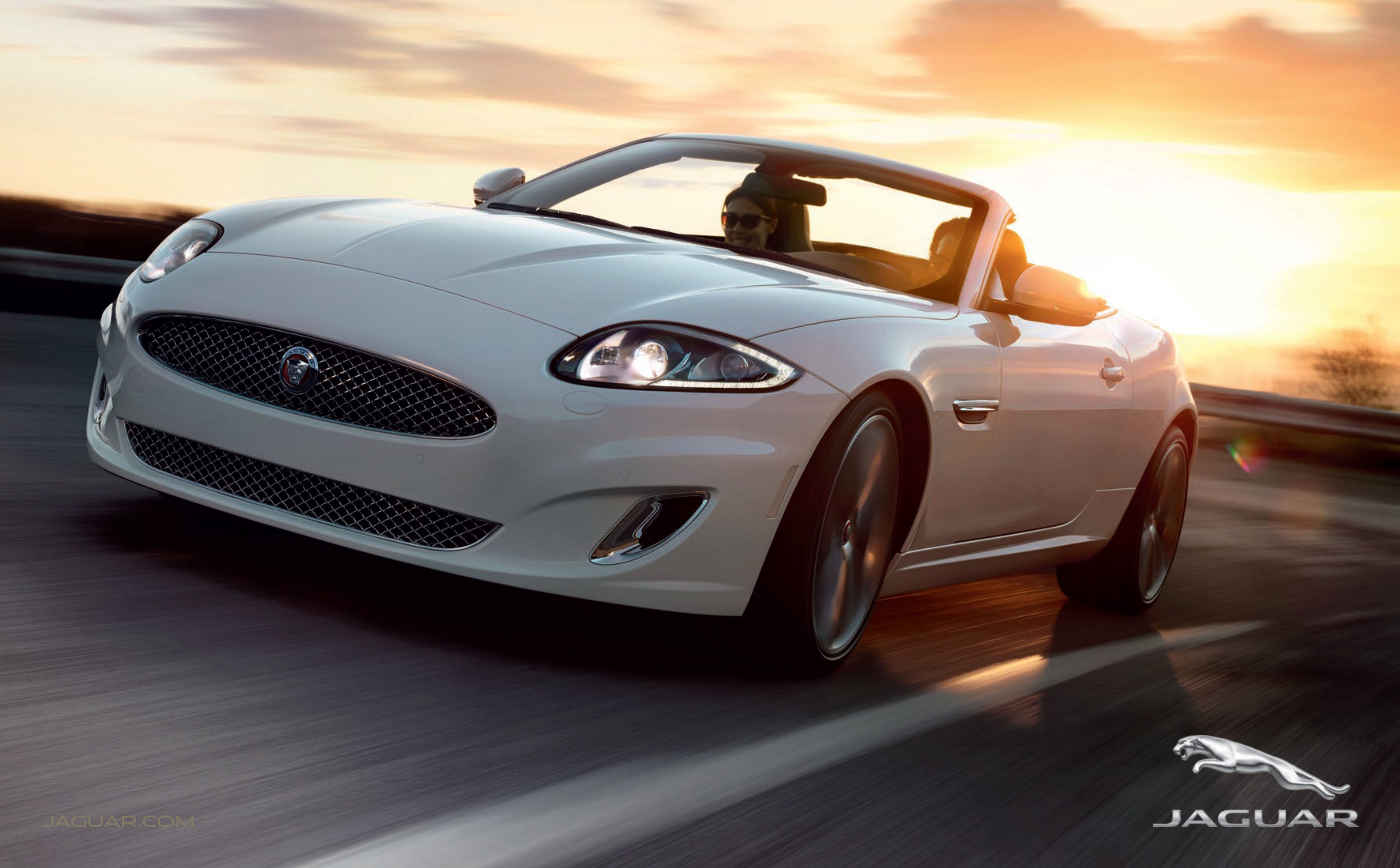
The Aluminium Sunset: Jaguar’s Final Grand Tourer
The XK’s Golden Hour

In 2013, the Jaguar XK occupied a precise and uncomfortable position: technically accomplished, aesthetically resolved, but also comprehensively overshadowed by its own successor. The engineers had solved the problems. The designers had found the lines. The marketing department had finally settled on language that didn't embarrass anyone. And then the market moved.
The successor was the F-Type. Lighter, louder, more demonstrably modern. What the XK was, in the autumn of 2013, was the last of its particular kind: a long-nosed, bonded-aluminium grand tourer with a naturally-aspirated V8 in the base model, a supercharged 510bhp variant in the middle, and a 542bhp XKR-S at the top that Jaguar’s copywriters described with a single, carefully chosen word: astounding. After decades of British automotive understatement, they had apparently decided that understatement would no longer do.
This is an analysis of the brochure they published in October 2013 to sell it. A forty-six page document for a car that was, in most meaningful senses, complete.
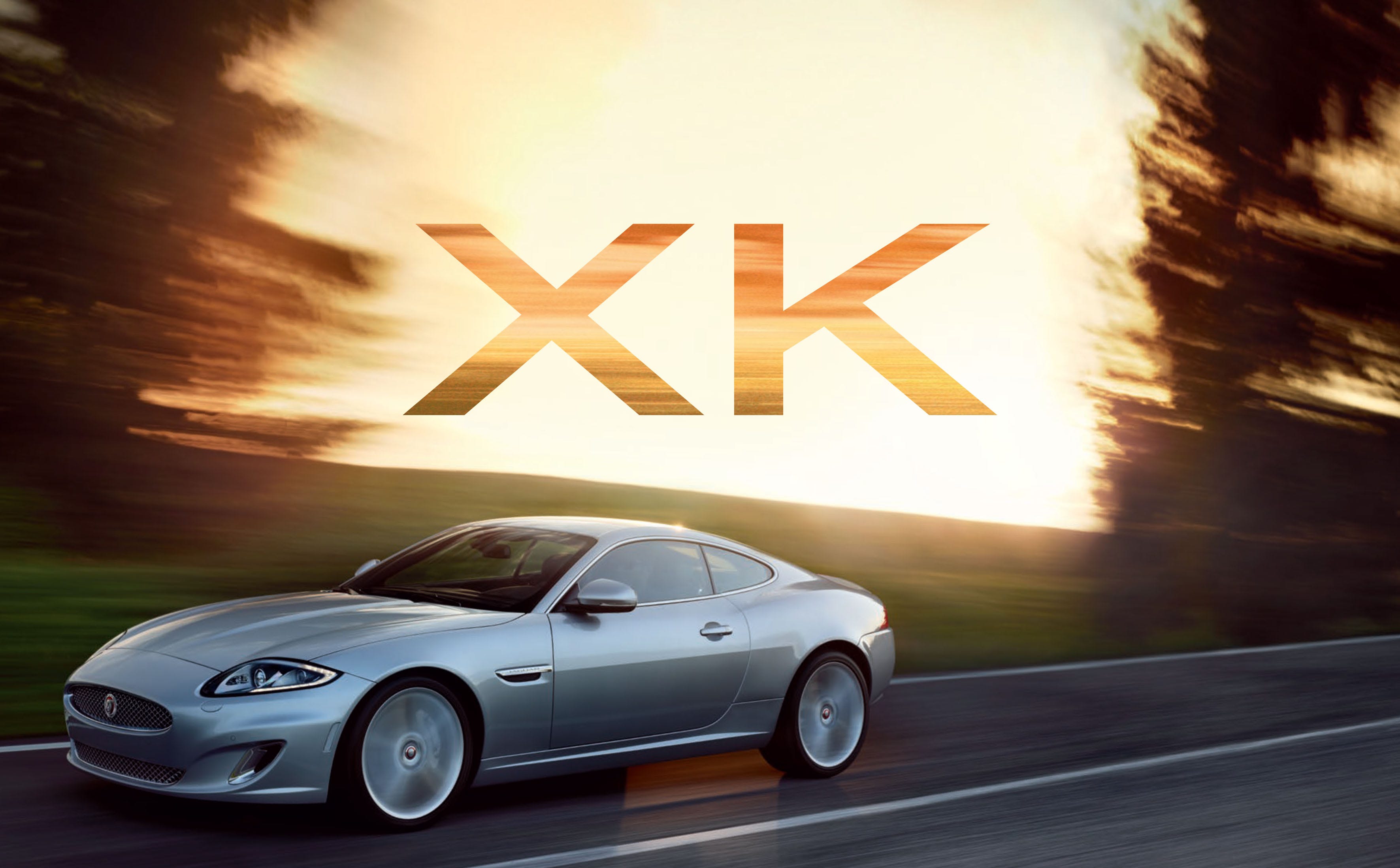
Coventry Cinematic: The Brochure as Light Study
Before a single word is read, the XK brochure establishes its visual contract. The cover image is the car in Rhodium Silver, motion-blurred against a sunset that occupies roughly seventy percent of the frame. The title, “XK”, is rendered in a typeface that appears to be absorbing the same golden light as the car beneath it. The whole thing looks less like a product brochure and more like the opening frame of a film that hasn’t yet decided whether it’s a thriller or a romance.
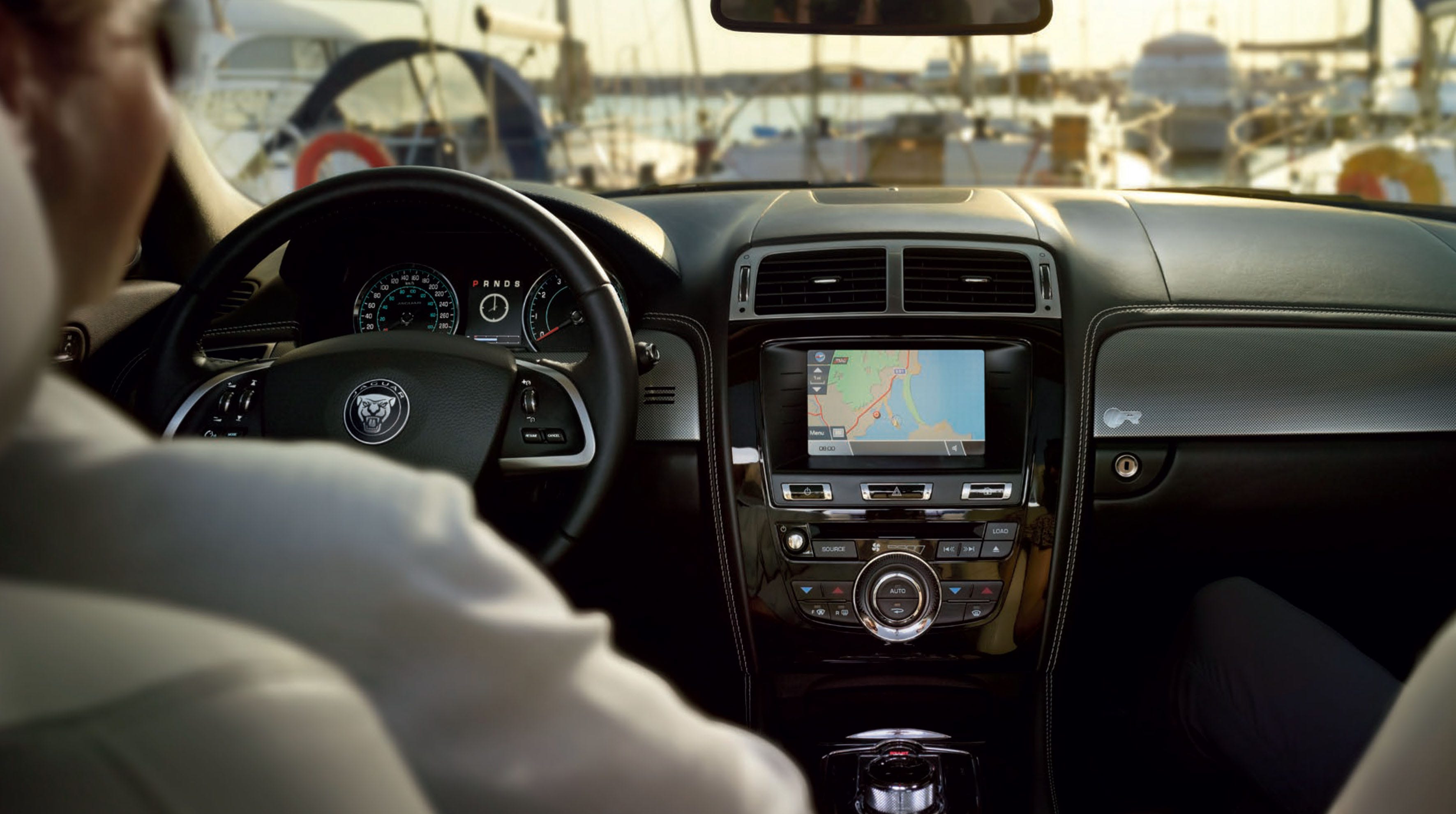
This is not accidental. Throughout forty-six pages, the brochure pursues a photographic language that treats the XK not as a machine to be evaluated but as a light-catching sculpture to be experienced. The cars are perpetually shot at magic hour. Sunsets streak across bonnets and door sills. Even the interior photography deploys the signature “phosphor blue” instrument lighting as a mood cue rather than a product specification, the dashboard illuminated like a cocktail bar at closing time.
The typography is Jaguar Type, the proprietary sans-serif introduced in the brand’s early 2010s identity refresh. Headers use wide character tracking, generous letter-spacing that signals “luxury” through the simple expedient of making words breathe. The colour palette across the brochure is deliberately restrained: Rhodium Silver, Ultimate Black, French Racing Blue. Against these foundations, the sunset photography lands with considerably more force.
What the brochure understands, intuitively, is that the XK’s greatest gift was always visual. Ian Callum’s X150 design, introduced in 2006 and facelifted to produce this final iteration, is among the more effortlessly resolved shapes of its era. The long nose, the fast roofline, the muscular rear haunches that the brochure calls exactly that: “muscular rear haunches.” In 2013, most manufacturers had abandoned such frankly physical vocabulary. Jaguar used it without embarrassment, because in this case it happened to be accurate.
Seductive Design
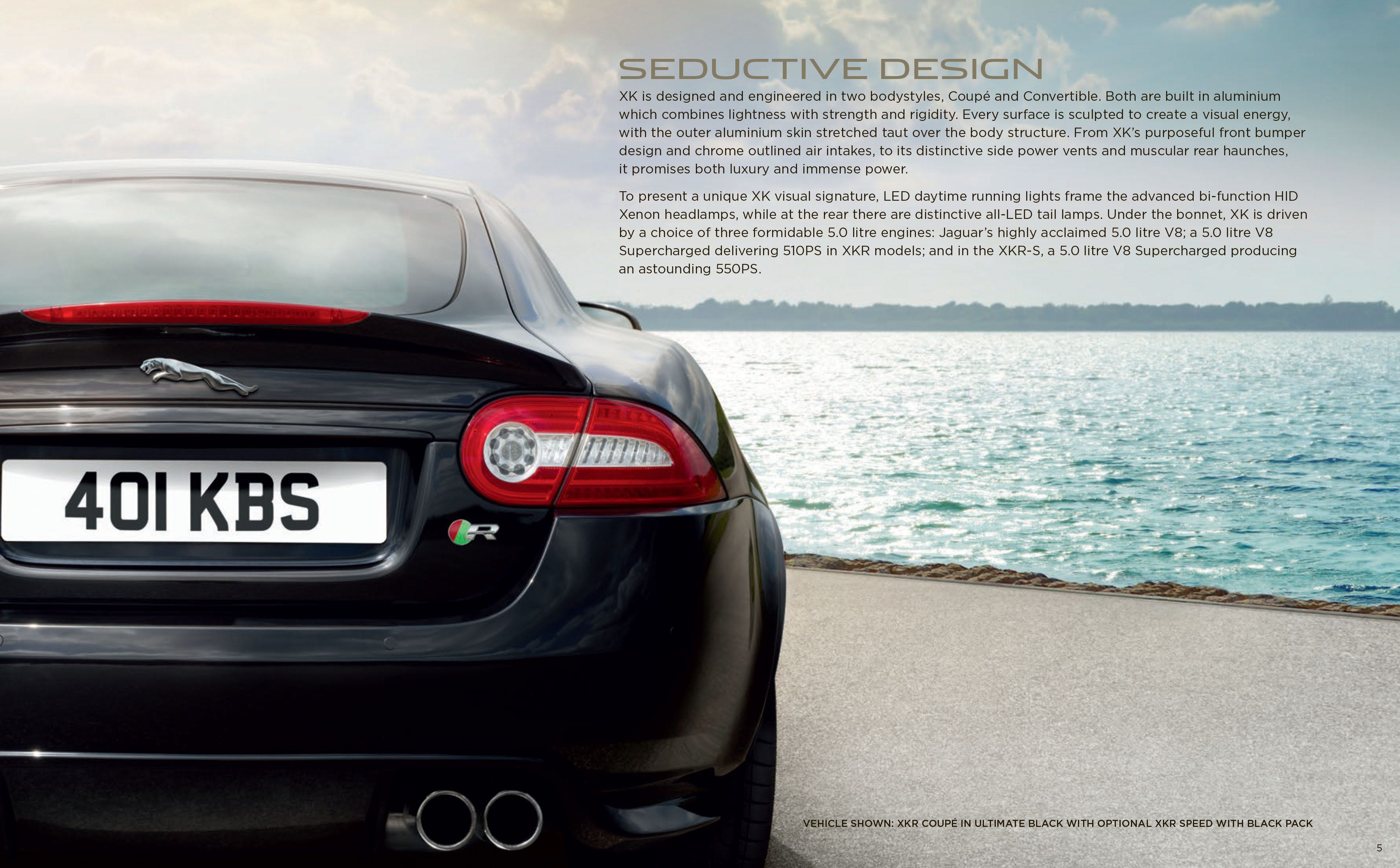
The brochure’s first real substantive spread carries the heading “SEDUCTIVE DESIGN” in the wide-tracked Jaguar Type, above a photograph of an XKR Coupé in Ultimate Black, shot from directly behind, the leaping cat badge centred on the bootlid, twin exhausts below. The image is deliberately confrontational: you are looking at the car's most powerful angle, rear haunches dominant.
The copy here performs a careful balancing act. It lists the visual elements sequentially, a purposeful front bumper design, chrome-outlined air intakes, distinctive side power vents, and it lists them in precisely the order your eye would travel around the car in a showroom. This is technical writing disguised as seduction. And then, at the end of the second paragraph, the tone changes:
“Under the bonnet, XK is driven by a choice of three formidable 5.0 litre engines: Jaguar’s highly acclaimed 5.0 litre V8; a 5.0 litre V8 Supercharged delivering 510PS in XKR models; and in the XKR-S, a 5.0 litre V8 Supercharged producing an astounding 550PS.”
The word “astounding” arrives like a key change. The preceding copy has been careful and measured. “Astounding” is neither. It is a word used by people who have run out of polite adjectives and decided to be honest. In 2013, Jaguar was finally punching directly at the German horsepower competition: BMW’s 650i produced 450bhp, Mercedes-Benz’s SL 63 AMG produced 537bhp. The XKR-S, at 542bhp in proper British measure, was matching the German flagships number for number. The brochure knew it. “Astounding” is the sound of a manufacturer that has spent a decade being dignified and decided, finally, to stop.
The Skeleton
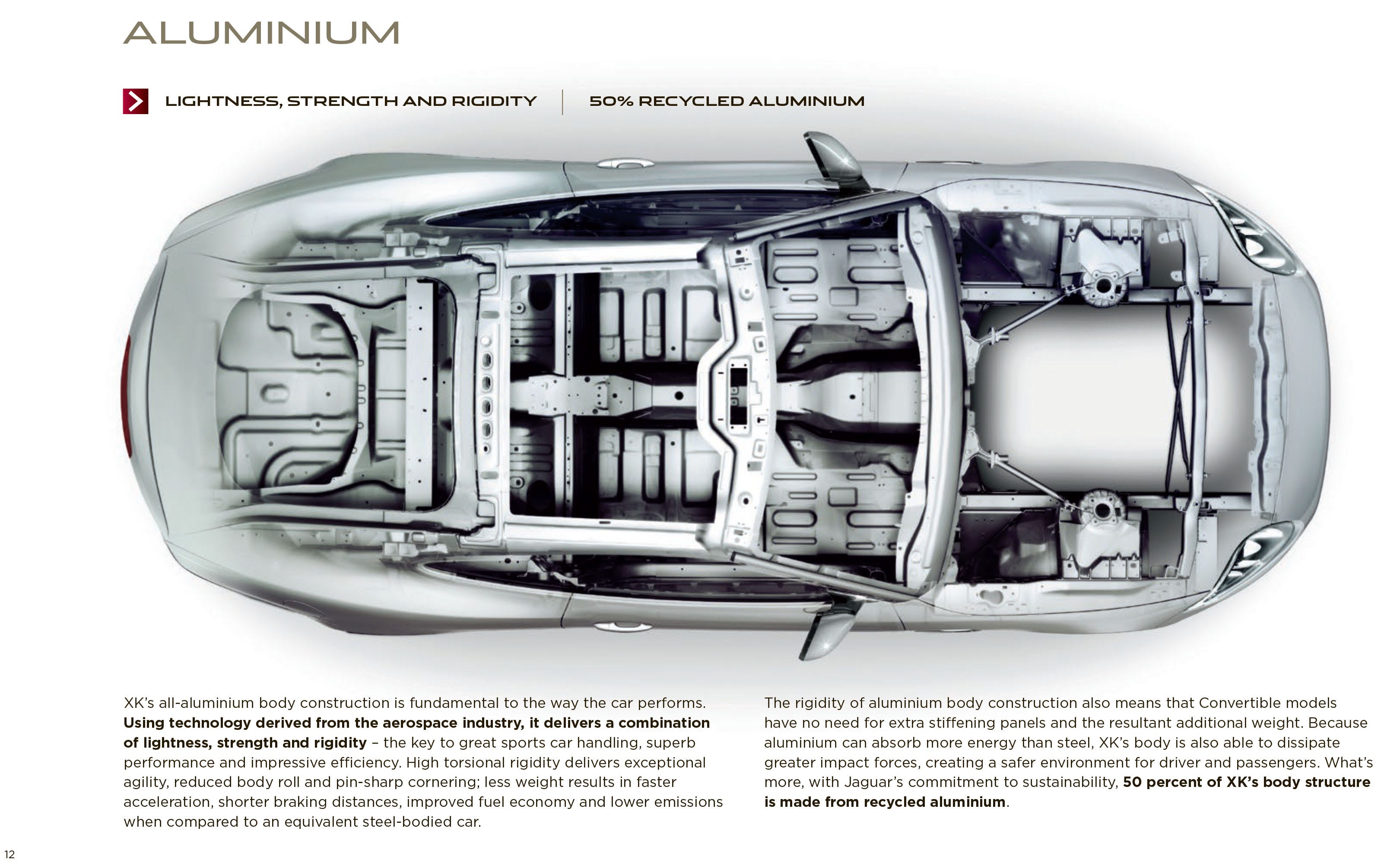
A top-down x-ray of the aluminium monocoque, the entire body structure exposed, fills the page with a diagram that reads simultaneously as engineering document and high-end design graphic. The heading is “ALUMINIUM” followed by two subsidiary captions: “LIGHTNESS, STRENGTH AND RIGIDITY” and “50% RECYCLED ALUMINIUM.”
The copy is worth reading closely, because it is performing two entirely different functions at once.
“XK’s all-aluminium body construction is fundamental to the way the car performs. Using technology derived from the aerospace industry, it delivers a combination of lightness, strength and rigidity.”
The first function: technical authority. The aerospace claim is genuine. Jaguar’s bonded-and-riveted aluminium structure, pioneered in the original XK8 of 1996 and refined through subsequent generations, was meaningfully derived from aircraft construction methods. The torsional rigidity gains over a comparable steel structure were real. The weight savings were real.
The second function: environmental virtue. “With Jaguar’s commitment to sustainability, 50 percent of XK’s body structure is made from recycled aluminium.” This sentence is doing extraordinary rhetorical work. It is taking an expensive, specialist, difficult-to-repair manufacturing process and reframing it as an act of ecological conscience. The aluminium wasn’t recycled because Jaguar was environmentally conscientious; the aluminium was recycled because recycled aluminium is cheaper and the closed-loop manufacturing process made economic sense. The brochure finds the interpretation most favourable to its narrative, which is, of course, exactly what brochures are for.
The 500Hz Brain
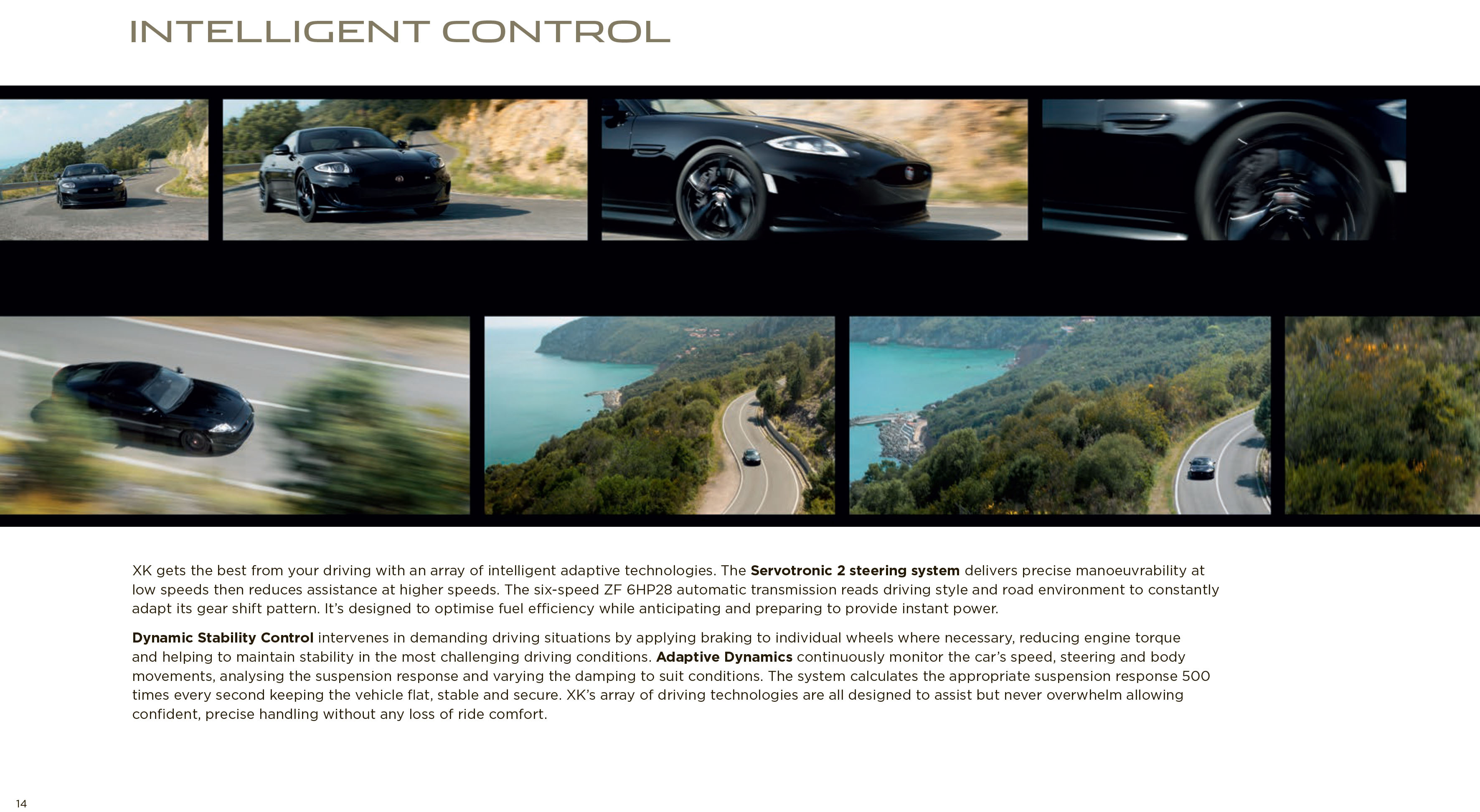
The “INTELLIGENT CONTROL” spread feature eight photographs arranged in two rows depict the XKR in motion, coastal roads, mountain bends, the car always slightly blurred against sharp landscape, the motion smear that tells you something is moving quickly even in a still image.
The centrepiece of the text is the Adaptive Dynamics system: continuously variable damping, monitoring speed, steering angle and body movement, adjusting suspension response in real time. The brochure renders this in a single sentence that is, technically, a claim about a piece of software but reads more like a philosophical statement about the relationship between driver and machine:
“The system calculates the appropriate suspension response 500 times every second keeping the vehicle flat, stable and secure.”
Five hundred times per second. The number is chosen for its psychological effect as much as its technical accuracy. It implies a level of intelligence so continuous and so granular that the driver cannot possibly intervene in a meaningful way. The brochure frames this as reassurance, “designed to assist but never overwhelm”. What it is actually describing is the progressive replacement of driver skill with computational intervention, the same invisible hand that every manufacturer was installing in every car of this period, and that no manufacturer would say directly.
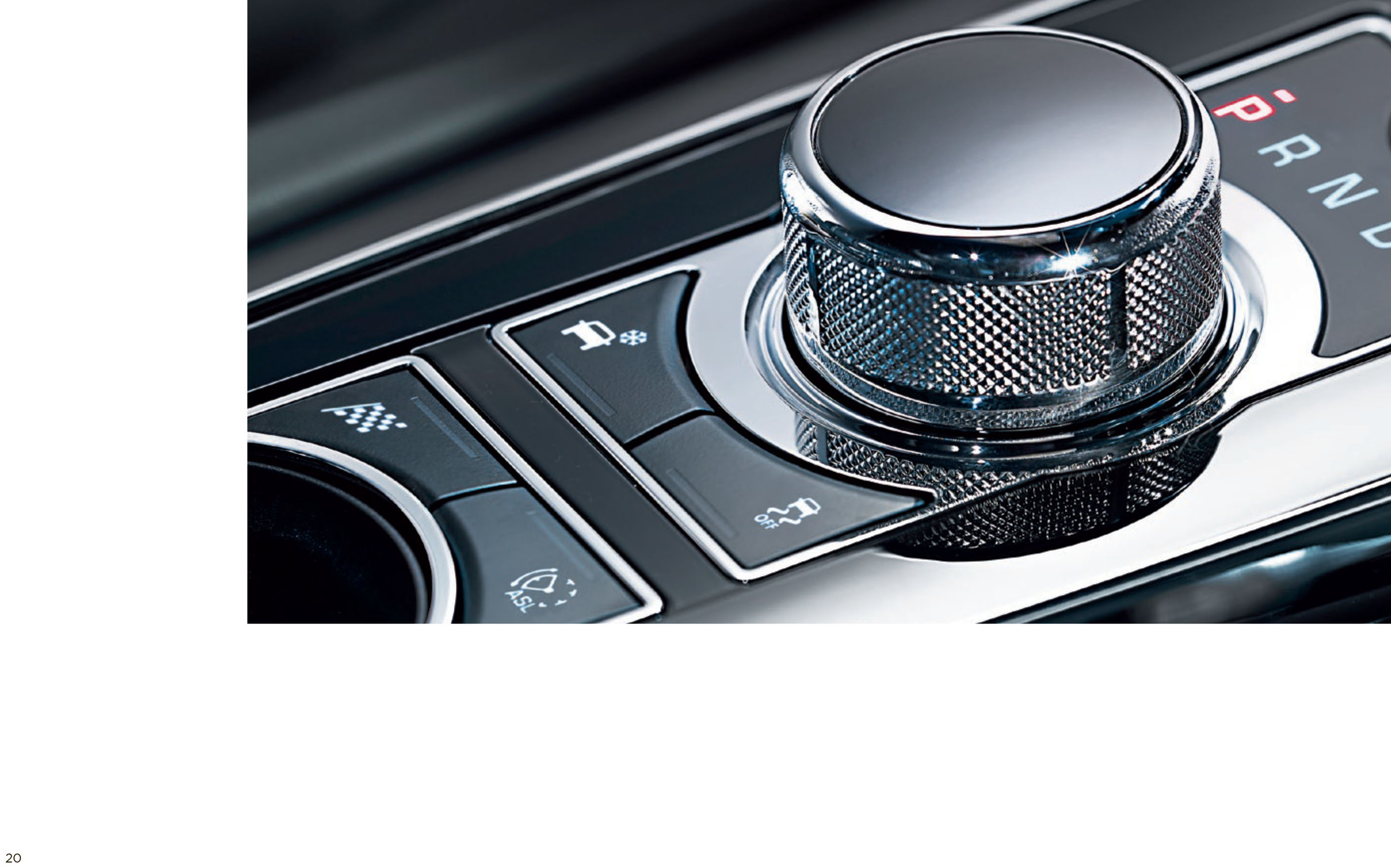
The ZF 6HP28 six-speed automatic transmission also appears on this page, described as reading “driving style and road environment to constantly adapt its gear shift pattern”. What the brochure does not mention is that the XF and XJ of the same era were running the ZF eight-speed unit. The XK retained the six-speed, framed as “tactile theatre” via the JaguarDrive Selector, the rising rotary gear selector that was the brochure’s preferred symbol of the XK experience. It was one generation behind. You would not know it from reading this.
The Seat Anatomy
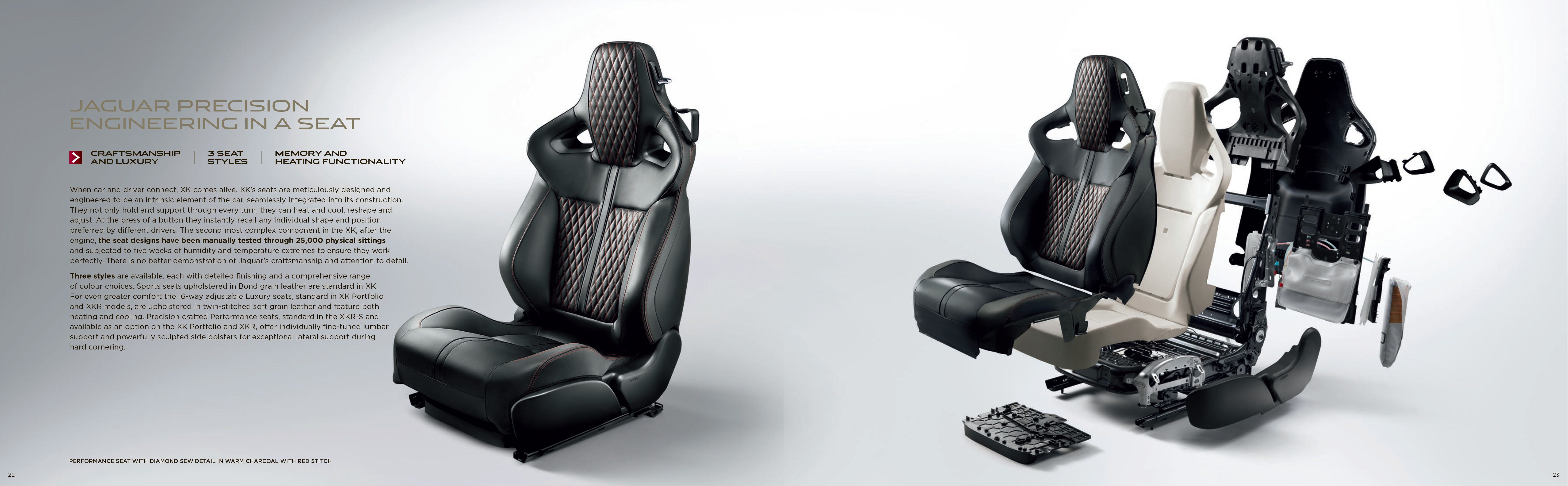
The brochure devotes a full spread to the XK’s seats, which is, on reflection, the correct editorial decision. Page 22 carries the headline “JAGUAR PRECISION ENGINEERING IN A SEAT” above a full-bleed studio photograph of the Performance seat in Warm Charcoal with Red Stitch. Page 23 is the money shot: an exploded view diagram of the seat in three states, dressed, partially disassembled, and fully exposed to the structure beneath, every bracket and motor and heating element arranged like a formal still life.
The copy contains the most arresting line in the entire brochure: “The second most complex component in the XK, after the engine.”
It is an admission, dressed as a boast, that where this machine concentrates its mechanical grit is not in the gearbox or the differential or the suspension, but in the lumbar support. The seat has been subjected to 25,000 physical sittings and five weeks of humidity and temperature extremes. The engine is first, the seat is second. What this taxonomy quietly reveals is that the XK’s engineering priorities had, by 2013, decisively shifted toward the interior experience: comfort, adjustment, memory, thermal management. Three styles were offered, Sports, Luxury, and Performance, each with comprehensive leather and stitching matrices mapped across eight subsequent pages of interior colour combinations that constitute the most genuinely complex section of the brochure.
The brochure is, on these pages, entirely honest about what the XK had become. It was a grand tourer in the complete sense: a car in which the quality of the seat over five hundred miles mattered as much as the suspension over a mountain road.
The Rearview Mirror: The Aluminium Sunset
The Problem: When the Pupil Eclipsed the Teacher
The XK’s commercial difficulty in 2013 was not of its own making. The car was, by any objective measure, the most technically accomplished version of itself that Jaguar had ever produced. The XKR-S was genuinely quick, the aluminium structure was genuinely sophisticated, and the interior was genuinely sumptuous. The problem arrived in the spring of 2013, in a smaller package, wearing the same badge.
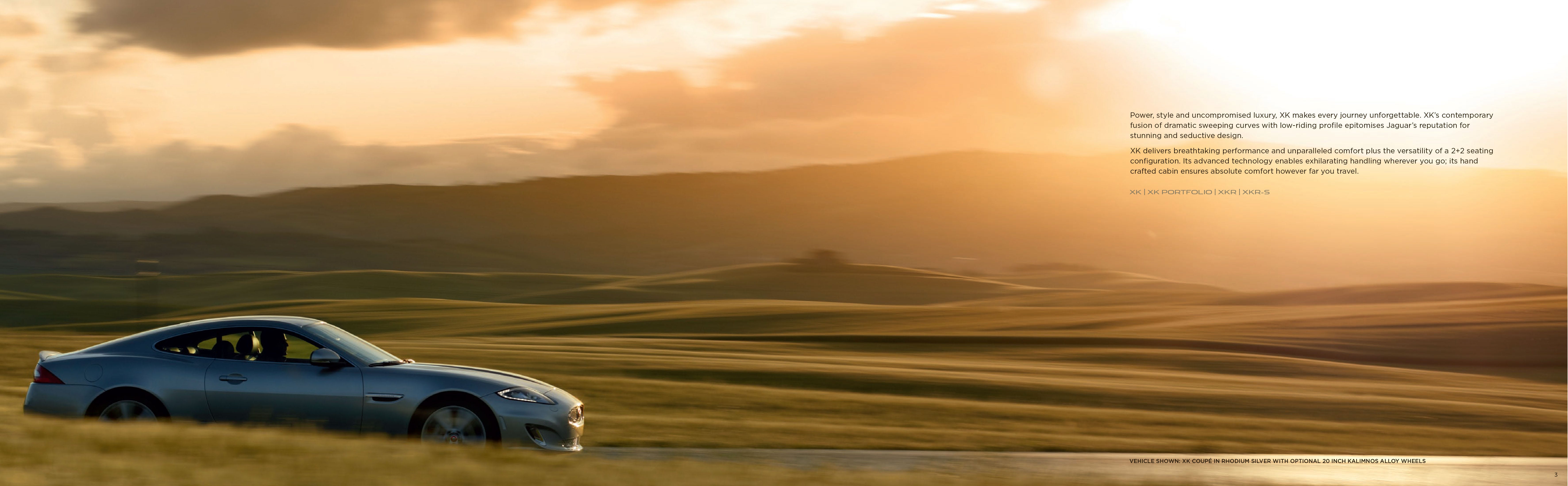
The F-Type was everything the XK was, compressed and sharpened by roughly fifteen years of suspension and powertrain development. It was lighter, more theatrical, more obviously a sports car rather than a grand tourer. In a market that had spent the intervening decade deciding it preferred sports cars to grand tourers, the XK found itself occupying an aesthetic position that the culture had moved on from. The brochure photograph that captures this most precisely is the opening spread: the XK Portfolio Coupé moving through a blurred moorland sunset, the landscape consuming it on all sides. It looks, with hindsight, like an allegory.
The Tax: What 500 Calculations Per Second Cost in 2026
The Complexity Tax on the XK is real and specific. The Adaptive Dynamics system that calculated suspension response “500 times every second” runs on a wiring harness that, at twelve or thirteen years of age, is developing the fatigue characteristics of any complex electrical system operating in a thermally stressed environment. Adaptive damper failures are documented. The “advanced bi-function HID Xenon” headlamps, which the brochure itemises as a signature visual element, are now a four-figure replacement cost per unit when the projector modules fail, which they do.
The ZF 6HP28 gearbox, described by the brochure as designed to “optimise fuel efficiency” through adaptive shift patterns, was presented to buyers as maintenance-free. The sealed unit, filled with fluid declared to be “lifetime”, has proven, in practice, to have a lifetime somewhat shorter than the cars themselves. Fluid changes that Jaguar said were unnecessary are now recommended by every specialist who works on these cars. The sealed ZF is not, in 2026, the argument it seemed in 2013.
The JaguarDrive Selector, the rising rotary gear selector around which the entire “XK Experience” section is built, has proven mechanically robust. This is worth noting. The brochure was not wrong about everything.
The Vindication: The Last Big Jaguar
In 2026, the XK has attained a status that was not predictable in 2013. It is the last naturally-aspirated Jaguar V8 in a grand tourer body. It is the last big Jaguar coupé with zero hybridisation, zero electrification, and zero apologetics about its fundamental purpose. The aluminium was a “virtue”, as the brochure insisted, before aluminium became primarily associated with reducing the weight penalty of battery packs.
The brochure, in its October 2013 optimism, was trying to sell cars. What it inadvertently documented was the moment when a particular strand of Jaguar, the all-aluminium V8 GT, reached its highest expression.
The sunsets in the photography were not, as it transpired, metaphorical. But the light they cast was real, and it is still catching on the flanks of Rhodium Silver coupés parked at the right sort of events, for people who know what they are looking at.