
The High Command: Decoding the 2007 Range Rover L322
The moment luxury off-roading became software

The 2007 Range Rover brochure (all 68 pages of it, printed on heavyweight gloss stock that feels closer to a museum catalogue than automotive literature) opens with a declaration: “With The Range Rover luxury has no limits.” It’s not a promise. It’s a philosophical statement. The Range Rover had completed its evolutionary arc from utilitarian farm implement to something closer to architectural sculpture. The L322 generation, in this particular specification year, represents the apex of a very specific vision: that a vehicle could be simultaneously a leather-lined sanctuary and a 2,700kg wading machine capable of fording 700mm of standing water.
This was the moment the S-Class learned to swim.
The Command-Zen Philosophy
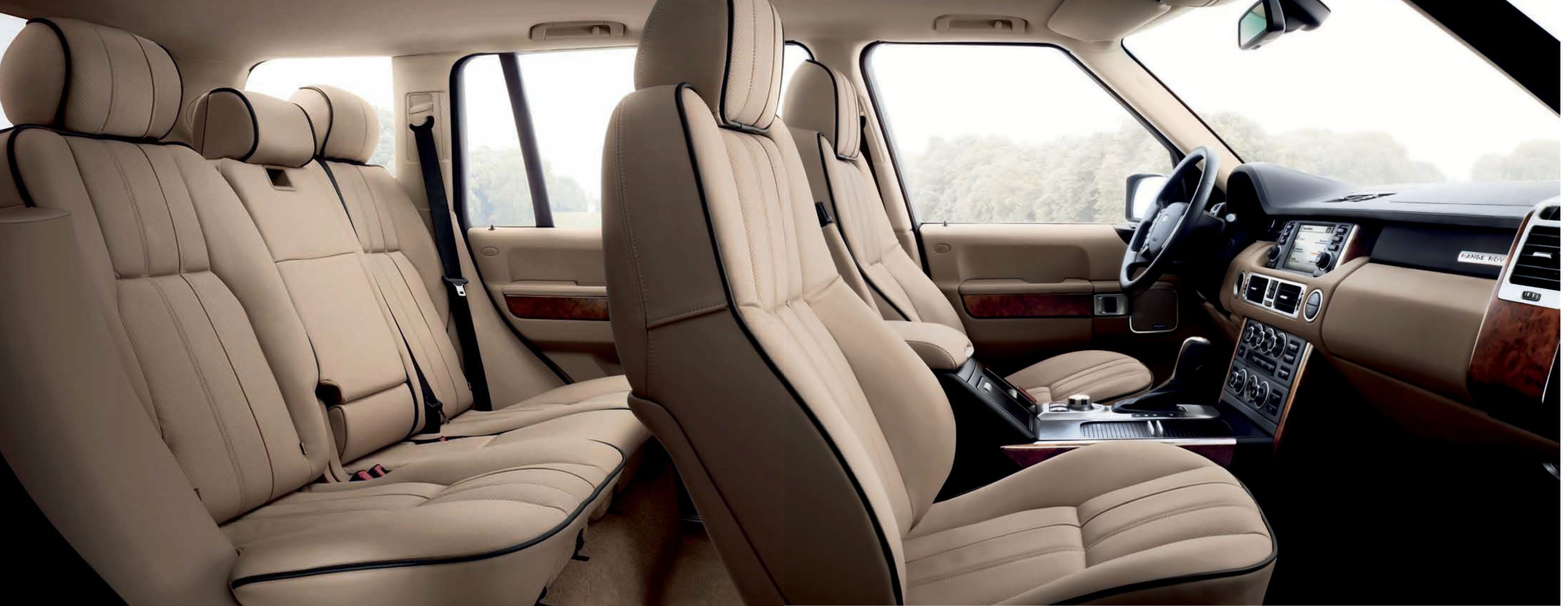
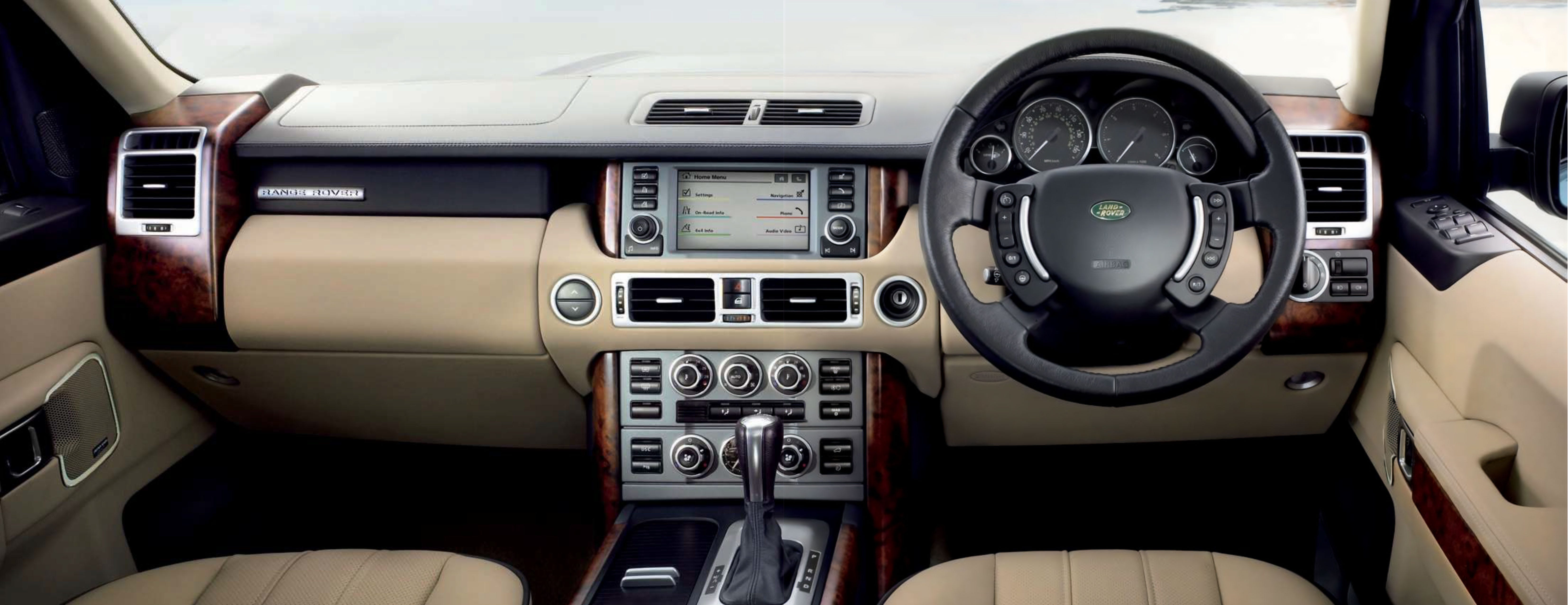
To sit inside the 2007 Range Rover is to enter a space that feels deliberately removed from automotive convention. There are no aggressive angles, no fighter jet affectations, no visual noise. The cabin vocabulary is borrowed from high-end Mayfair watch boutiques: those hushed, wood-panelled rooms where serious money changes hands in whispers. Everything is orthogonal, architectural, weighty. The dashboard presents itself as a horizontal plane of burr walnut veneer, interrupted only by the circular Terrain Response dial that sits like a compass in mahogany.
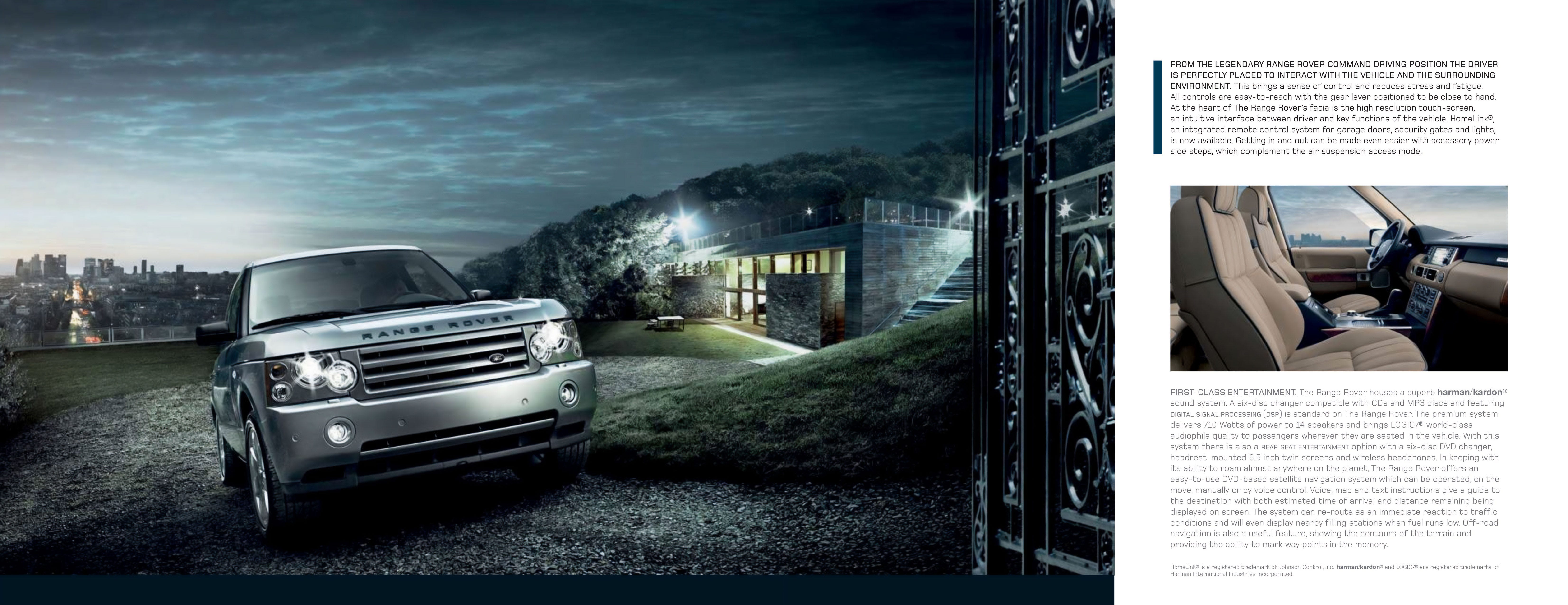
The brochure devotes Page 25 to what it calls the “Captain’s Chairs”: a term that acknowledges what everyone already knows: this is not a driver’s seat. This is a position of command. The Harman/Kardon Logic 7 audio system, detailed in clinical technical prose, promises “world-class audiophile quality to passengers wherever they are seated.” Note the language: not “listeners”, but passengers. The Range Rover presumes you’re going somewhere significant enough to warrant such comfort.
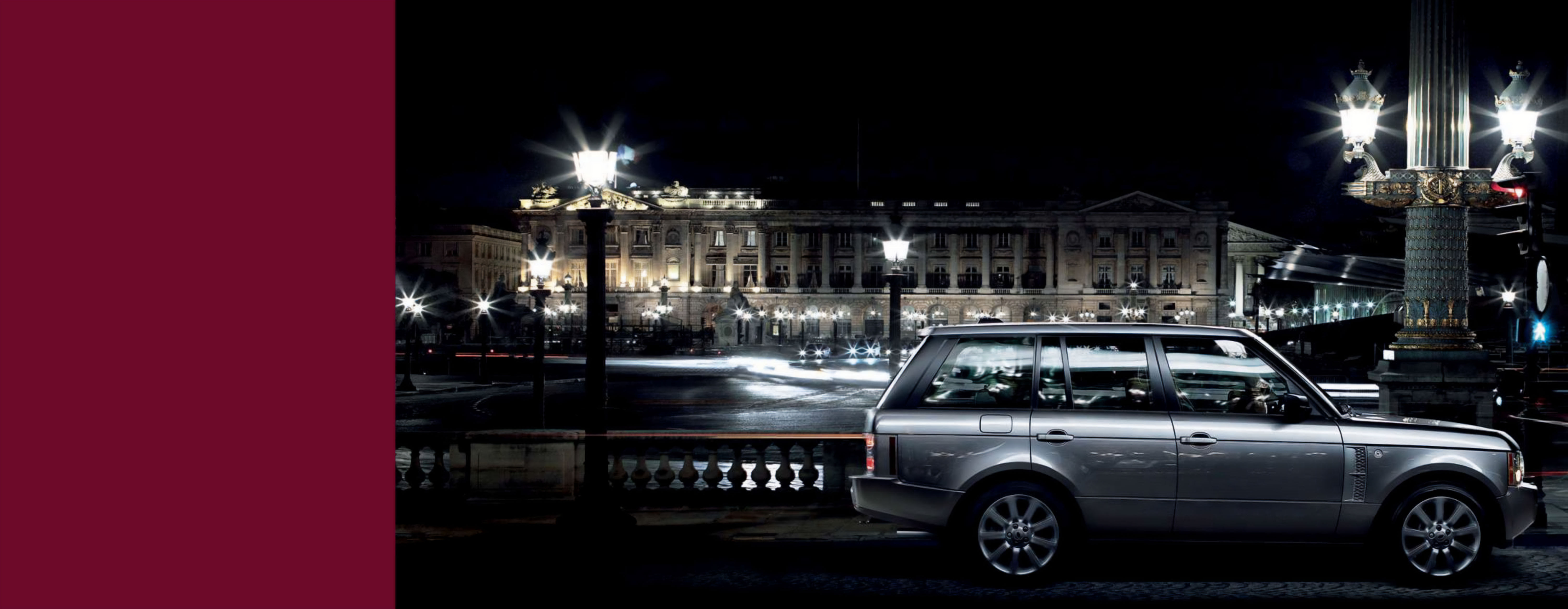
This is what we might call “Command-Zen”: a design philosophy that marries the military concept of situational awareness with the minimalist tranquillity of a meditation chamber. You are simultaneously in complete control and completely at ease. The brochure shows night-noir photography: the Range Rover parked in front of illuminated Parisian buildings, its flanks catching streetlight like a monument. Later, the same vehicle is photographed in clinical studio white space, its body reduced to pure geometry.
This Parisian imagery is strategic. It’s designed to erase the cultural memory of oily, mud-caked Land Rovers from the 1970s: the agricultural workhorses caked in farm yard residue. Solihull royalty now wore evening dress, not wellington boots.
It is both monastic and monolithic.
The Technical Foundation
If the cabin is a statement of intent, then the mechanical specification is its validation: a set of technical absolutes delivered with engineering certainty.
The Twin Hearts
Two engines define the 2007 Range Rover’s character, and they represent fundamentally different approaches to power:
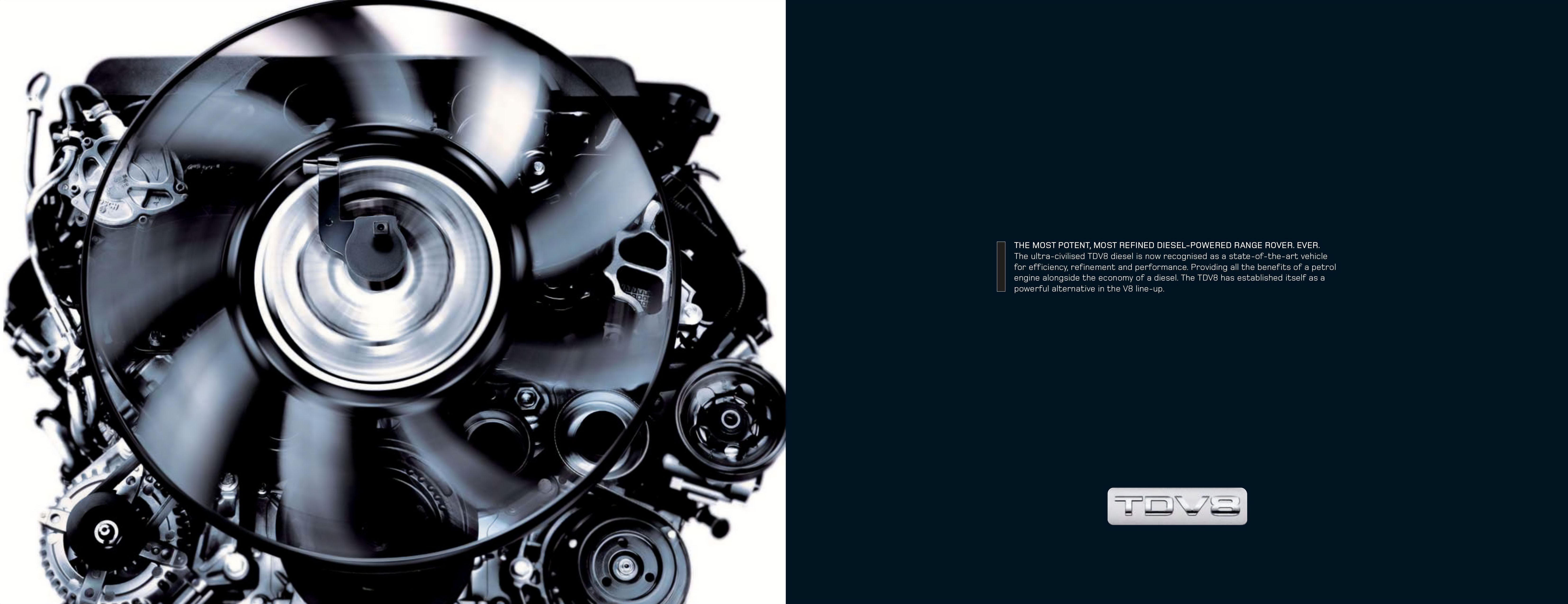
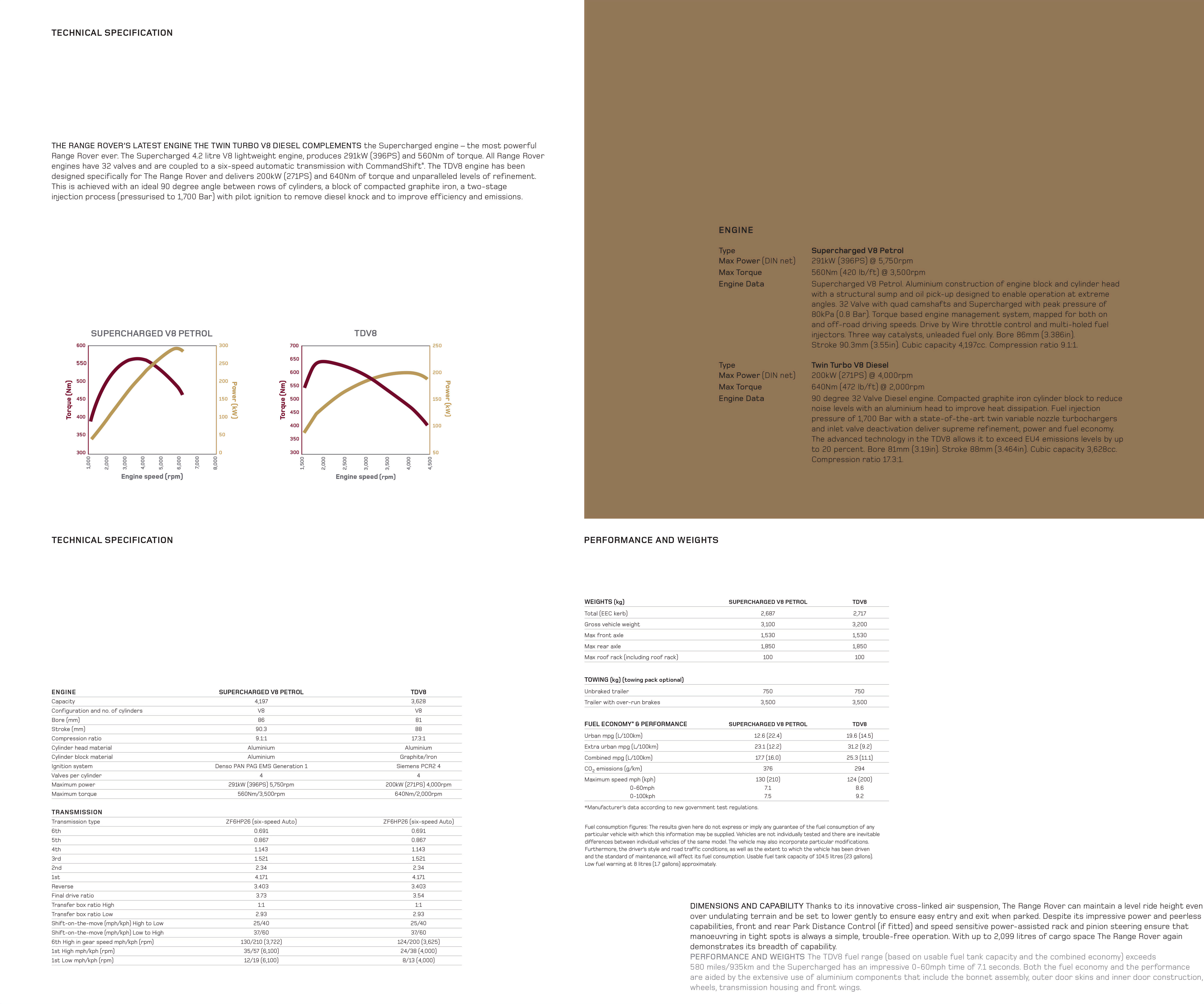
The 4.2 Supercharged V8 (390bhp) is the architectural statement. This is the final flowering of Jaguar’s Ford-era V8: a 32-valve forced-induction unit that delivers 413lb ft of torque and propels 2,687kg from standstill to 60mph in 7.1 seconds. These are not sports car figures. They are, instead, expressions of regal momentum. The brochure devotes Page 12 to a macro-shot of the engine’s cooling fan, treating the V8 not as a power plant but as industrial art: concentric circles of precision engineering photographed like a Bauhaus study.
This engine represents a philosophical departure from German rivals. Where BMW’s V8s screamed to redline and Mercedes’ units emphasised mid-range refinement, the Jaguar AJ-V8 in supercharged form delivered its power with a peculiar combination of refinement and aggression. The Eaton supercharger whine (audible under full throttle but subdued at cruise) served as an acoustic signature: you knew what was under the bonnet without needing to prove it. In a vehicle weighing nearly three tonnes, the 7.1-second sprint to 60mph was less about velocity than inevitability. This was power as authority, acceleration as prerogative.
The 3.6 TDV8 Diesel (268bhp) is the volume hero, and paradoxically, the more compelling technical achievement. This twin-turbocharged 32-valve V8 (part of Ford’s “Lion” engine family) delivers a monstrous 472lb ft of torque. This is the engine that finally gave the Range Rover the low-end pulling power its towing-capacity promises always implied. At 3,500kg, the L322 could legally tow the weight of two Mazda MX-5s. The TDV8 is what made this believable.
More importantly, the TDV8 recalibrated the character of Range Rover ownership in the UK market. Where the supercharged V8 was aspirational (a statement purchase), the diesel was sensible, almost virtuous. It returned approximately 25mpg in combined driving (versus the V8’s 16mpg), making it politically defensible in an era when fuel prices and environmental consciousness were beginning to shape premium vehicle purchases. The torque delivery, peaking at just 2,000rpm, meant effortless overtaking and towing without the drama of high-revving petrol engines. This was the engine for the gentleman farmer who needed to tow horse trailers at dawn and attend board meetings by noon.
The Interface Revolution
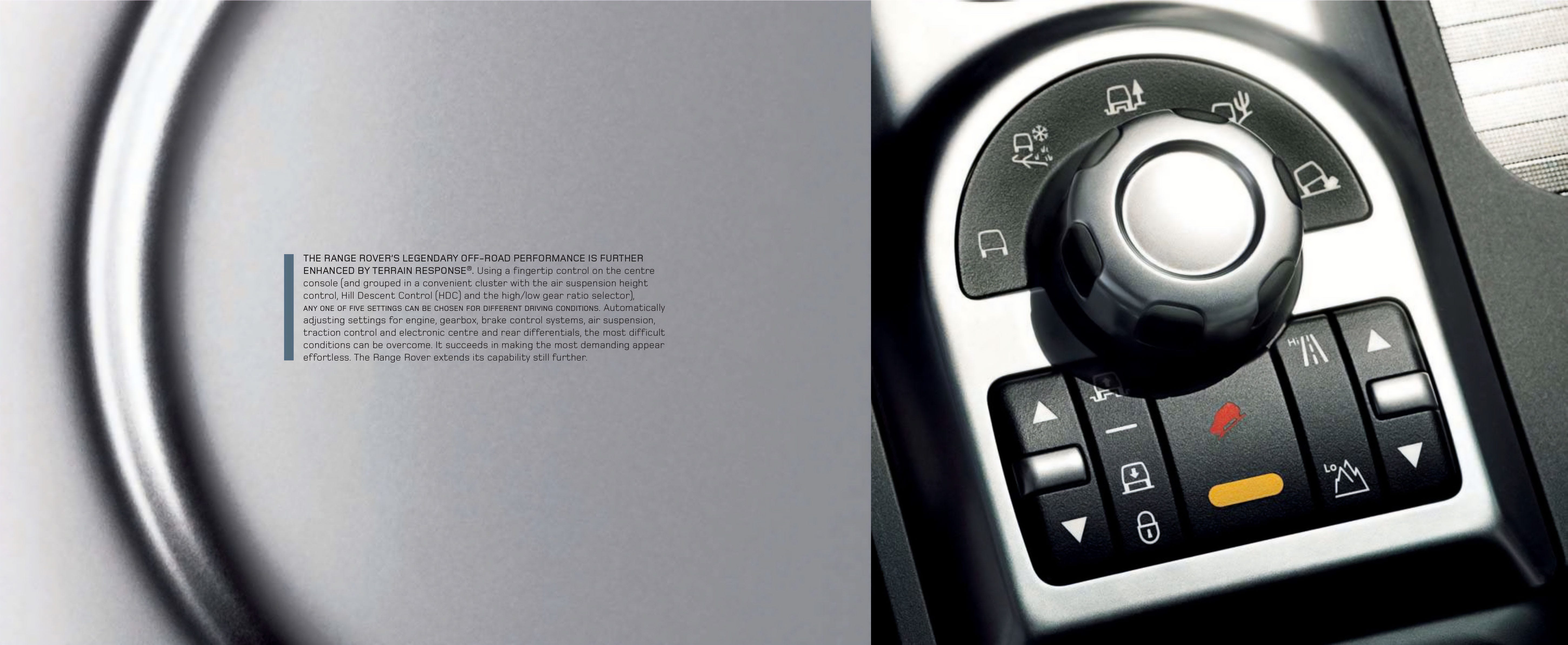
Page 18 of the brochure features what may be the most significant technological contribution of the L322 era: the Terrain Response dial. Five positions. Five terrain modes. The copy, printed in all-caps Helvetica, reads: “ANY ONE OF FIVE SETTINGS CAN BE CHOSEN FOR DIFFERENT DRIVING CONDITIONS.”
This is the moment off-roading became software.
The clinical font choice is deliberate: Helvetica signals that the “High Command” is a professional, technical operation, not a leisure activity. This is engineering communication, not marketing hyperbole.
Prior to this system, driving a capable 4x4 required technical knowledge: diff locks, transfer case ratios, tyre pressure adjustments. Terrain Response abstracted all of this into a single rotary controller. Turn to “Grass/Gravel/Snow.” The vehicle recalibrates throttle mapping, traction control intervention, transmission shift points, and differential behaviour. The driver simply... drives. It’s the automotive equivalent of Apple’s early promise: “It just works.”
The brochure treats this dial with the reverence usually reserved for Swiss watch complications. It is photographed in isolation, backlit, the five modes visible like stations on a compass: General Driving, Grass/Gravel/Snow, Mud & Ruts, Sand, Rock Crawl. Each mode is a software state, a reprogramming of the vehicle’s entire sensory system.
This was Range Rover’s masterstroke: packaging extreme capability inside a user experience that felt no more complex than selecting a phone ringtone.
The Skeleton
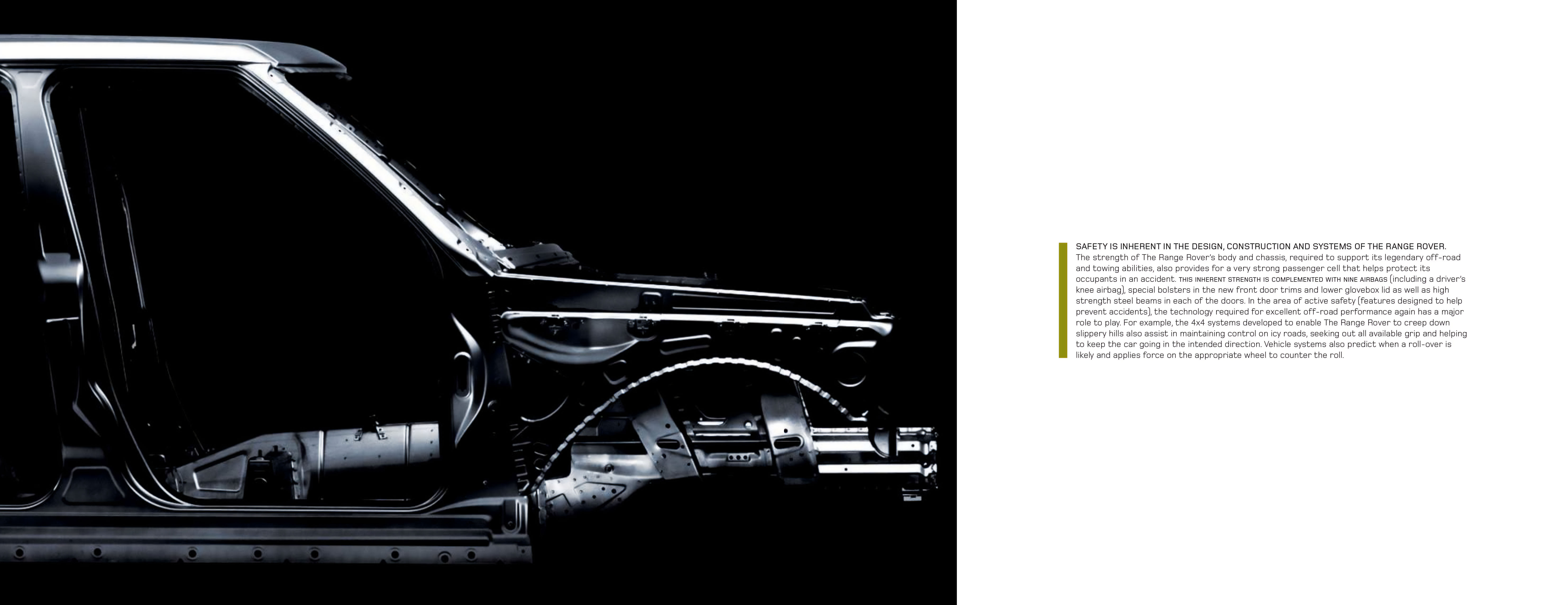
Page 44 presents the monocoque frame in exploded-view technical illustration. The copy justifies the vehicle’s substantial mass as a structural necessity: “Inherent strength... required to support its legendary off-road and towing abilities.” This is defensive marketing disguised as specification. At 2,717kg (TDV8), the L322 was the heaviest vehicle in Land Rover’s lineup: “Land Yacht” became industry shorthand. But the brochure reframes this weight as gravitas, as permanence, as the physical manifestation of capability.
The monocoque construction (as opposed to body-on-frame) gave the L322 a low centre of gravity and car-like handling dynamics. But it also made the vehicle fundamentally dependent on its air suspension system to achieve the ground clearance required for serious off-roading. This dependency would, in hindsight, become the L322’s defining vulnerability.
The Competition: A Class of One
In 2007, the Range Rover occupied a market position so specific it bordered on monopoly. This was not accidental. Where other manufacturers saw the luxury SUV segment as an opportunity to apply saloon principles to taller bodies, Land Rover understood something more fundamental: that true luxury in a 4x4 context required actual capability, not merely the aesthetic suggestion of it.
The alternatives told their own story. The Mercedes-Benz G-Class (revised for 2007) offered three-row seating and established luxury credentials but lacked the Range Rover’s architectural gravitas and that critical split tailgate heritage. The Porsche Cayenne was faster on tarmac and technologically sophisticated, but visually aggressive in a way that announced its ambitions loudly: a statement of arrival rather than inherited authority. The BMW X5 was fundamentally a luxury saloon raised on stilts, with no pretence of serious off-road capability and no cultural DNA connecting it to anything beyond the autobahn.
The Range Rover, by contrast, was a vehicle that could deliver its owner to a pheasant shoot in Scotland, then transport them to dinner at Claridge’s, then ford a river the following morning. The brochure frames this not as versatility but as inevitability: Page 7’s manifesto describes the Range Rover as “affording those inside a powerful expression of confidence and elegance”, as if capability were simply an extension of character.
This positioning allowed Range Rover to command premium pricing even against established German luxury brands, demonstrating that buyers valued authenticity over alphabet-badge prestige.
The Narrative Arc: Ford’s Endgame
This model year represented the completion of a decade-long transformation. When Ford purchased Land Rover from BMW in 2000, the L322 was still in development. Launched in 2001, it initially ran on BMW’s mechanical DNA: powered by Munich’s engines and running Bavarian electronics. Between 2002 and 2006, Ford systematically replaced these components with in-house alternatives: Jaguar V8s, ZF transmissions, and bespoke software architecture.
The TDV8 diesel, introduced for 2007, was the final piece. This engine delivered the 472lb ft of torque that the vehicle’s physical presence had always promised but the BMW inline-six could never quite provide. The brochure doesn’t explicitly state this transition (marketing never does), but the subtext is clear in the technical specifications printed on page 54: Twin-Turbo 32V V8.
This was Ford’s moment of vindication: proof that a volume manufacturer could match German engineering sophistication while adding the low-end torque and V8 soundtrack that American buyers expected from a luxury vehicle.
It was also, as history would prove, Ford’s farewell. By 2008, the financial crisis would force Ford to sell Land Rover and Jaguar to Tata Motors. The 2007 Range Rover is, in this sense, a closing statement: the final expression of Ford’s vision for the brand.
The Rearview Mirror
Nearly two decades removed, the 2007 Range Rover L322 provokes three distinct reactions, depending on who’s looking at it.
The Technical Reality: High-Maintenance Icons
The “Command-Zen” experience was powered by a nervous system of sensors, actuators, and air springs. The brochure’s promise of “effortless” capability was technically accurate: the systems worked invisibly, when they worked. The problem was (and is) that they stop working.
Air Suspension: The Achilles’ heel. Each corner of the vehicle rides on an air spring controlled by electronic valves and fed by a central compressor. Perished air springs are not an if but a when, typically manifesting as a vehicle that sags overnight, resurrecting itself only after the compressor runs for several minutes. Replacement requires specialised tools and genuine components are costly.
TDV8 Turbochargers: The twin-turbo configuration that delivers the diesel’s mighty torque is also its primary failure point. Turbo wastegate hoses crack. Actuators seize. A turbo replacement at a Land Rover specialist represents a substantial investment.
Brake System: The L322 uses Brembo four-piston front callipers: excellent for stopping 2,700kg, expensive to service. Front axle brake work alone requires a significant budget.
The brochure makes no mention of service intervals, component lifecycles, or ownership costs beyond fuel economy. In 2007, these were concerns for “later”. That time has arrived. A well-maintained L322 TDV8 requires consistent financial commitment. A neglected one becomes a restoration project.
The Market Recalibration: From Depreciation Floor to Collectible Ascent
For most of the 2010s, the L322 suffered catastrophic depreciation. By 2015, examples could be purchased for a fraction of their original list price. The market viewed these as disposable luxury goods, throwaways from a pre-recession era of excess.
But around 2020, something shifted. Collectors and enthusiasts began recognising the L322 as the last “pure” boxy Range Rover before the design language softened into the L405’s more sculpted, bling-oriented aesthetic. The Command-Zen minimalism, once dismissed as dated, now reads as restrained and timeless.
Clean, low-mileage examples (particularly TDV8 models in desirable colours with full service histories) have begun appreciating. The market has recognised what the brochure always knew: this was not a vehicle designed for three-year leases. It was a statement piece, built for permanence.
The Legacy: The Blueprint for Everything After
The L322’s most lasting contribution wasn’t its specific execution (the air suspension problems and electrical gremlins ensure that) but rather its conceptual framework. Every luxury SUV produced after 2007 is, in some sense, responding to the L322’s formula:
Terrain Response: Now industry-standard. Jeep’s Selec-Terrain, Mercedes’ Dynamic Select, Toyota’s Multi-Terrain Select: all descendants of that 2007 rotary dial.
Monocoque Construction with Air Suspension: The combination of car-like unibody rigidity with electronically adjustable ride height became the default architecture for premium SUVs. The body-on-frame design is now relegated to workhorses and heritage models.
The Aesthetic Calm: The L322’s refusal to look aggressive, to shout its capabilities through styling, influenced everything from the Bentley Bentayga to the Rolls-Royce Cullinan. Luxury SUVs could be serene rather than sporty, monolithic rather than athletic.
The irony is that Range Rover itself largely abandoned the Command-Zen philosophy with the 2013 L405 generation, which introduced more chrome, more visual drama, more explicit luxury cues. The L322, in retrospect, was the purest expression of a design philosophy that the brand has since diluted.
Coda: The Price of Presence
To acquire a 2007 Range Rover L322 in 2026 is to enter into a very specific pact. You are purchasing not merely transportation, but a daily exercise in commitment. This is a vehicle that demands specialist knowledge, access to a trusted independent Land Rover technician (dealer servicing is financially prohibitive), and a willingness to address maintenance proactively rather than reactively.
The brochure’s promise (”luxury has no limits”) was never meant to include ownership costs.
But for those willing to accept these terms, the reward is access to a particular kind of presence. The L322 is not fast, not fuel-efficient, not modern in its technology. But it occupies space (physical and psychological) in a way that contemporary vehicles, with their anxious LED lighting and their hyperbolic styling, simply do not. It is a monument to a moment when automotive design believed that understatement was the ultimate luxury.
The High Command endures. It simply requires commitment.
The Fine Print

What a great read. Fabulous. Loved this: “This was the moment the S-Class learned to swim.”