The Last Proper Mercedes? Why the W204 C-Class Still Matters
Stuttgart’s apology tour, twenty years on

There’s a moment, usually around three in the morning on a rain-slicked dual carriageway, when you realise a car is properly sorted. It’s not about power figures or nought-to-sixty times. It’s about the way the suspension breathes over motorway expansion joints, the way the steering weights up through a long bend, the sense that several thousand intelligent engineering decisions have converged into something that just works.
The W204 C-Class gives you that moment. Which is remarkable, really, because this was the car Mercedes built to say sorry.
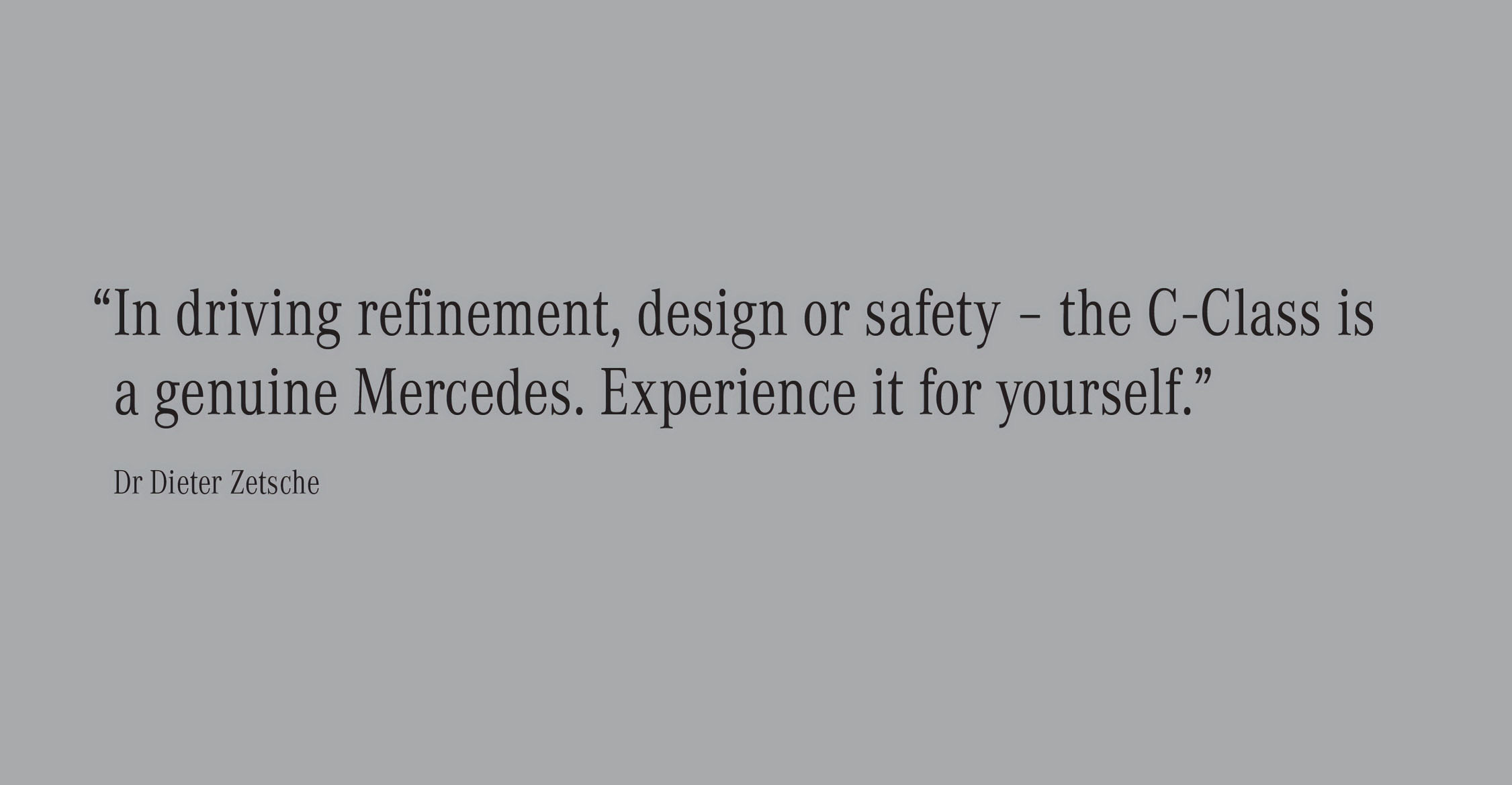
By 2007, the suits in Stuttgart were uncomfortably aware that the early 2000s hadn’t been kind to their reputation. The W203, the previous C-Class, had been a litany of squeaks, rattles, and dubious plastics that made BMW’s 3 Series feel like a Bentley. Dr Dieter Zetsche’s keynote at the W204 launch was essentially a very expensive mea culpa wrapped in corporate speak about ‘genuine Mercedes’ quality and 120 years of heritage. Translation: we cocked it up last time, and we’re terribly sorry.
The W204, then, was less a new model and more a reputation-recovery programme. And here’s the thing: it worked.
The Split-Face Gambit: Marketing’s Moment of Clarity
For the first time in its modern history, Mercedes admitted what BMW had known since the E30: the compact-executive market isn’t monolithic. You’ve got two distinct tribes buying these cars, and they want different things.
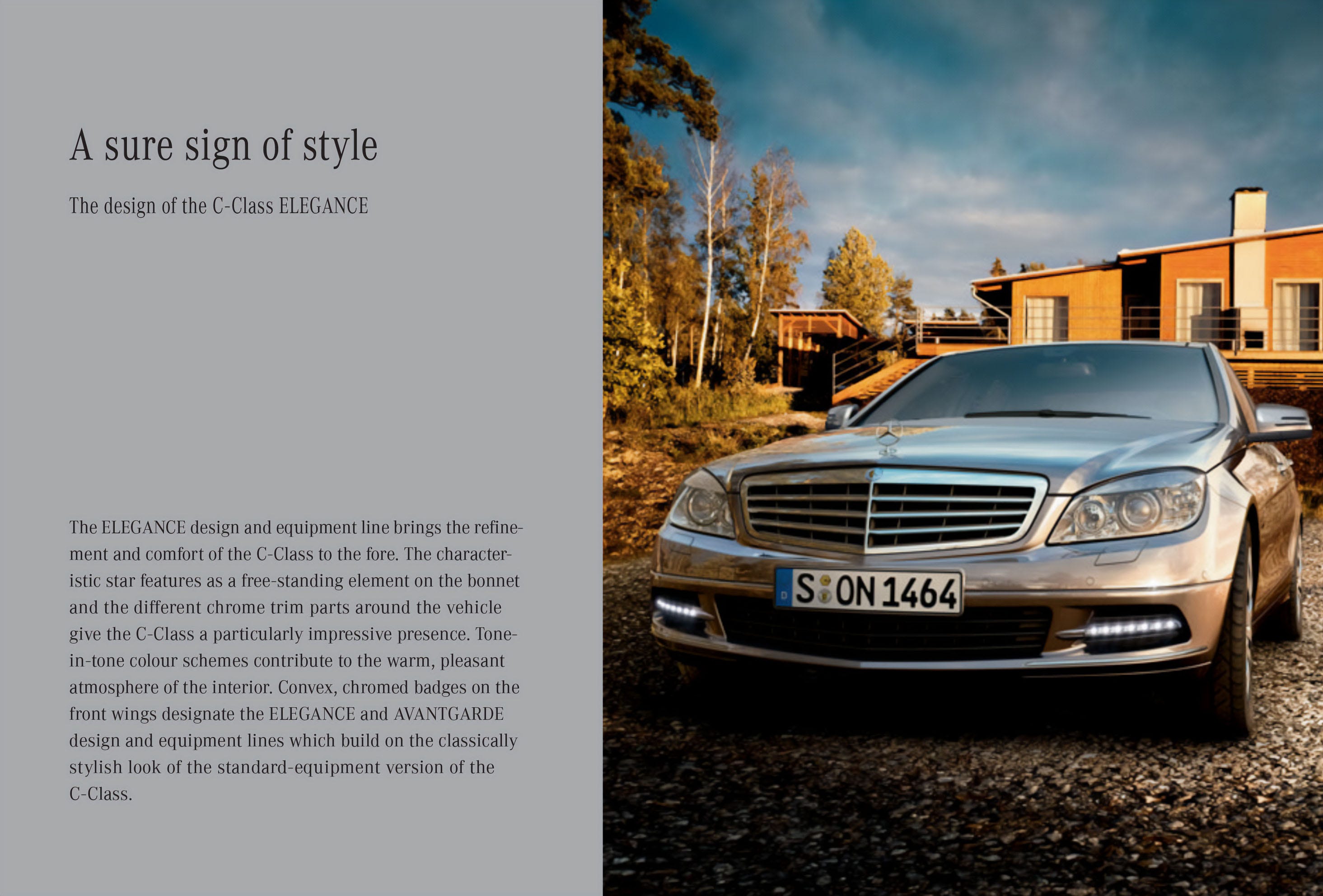
The Elegance line gave you the traditional Mercedes face: free-standing bonnet star, chrome three-louvre grille, eucalyptus wood trim inside. This was for the conservative buyer, the chap who’d driven W123s in the Eighties and still thought of Mercedes as the car your bank manager drove. It whispered ‘establishment’ and ‘good taste’ and ‘my pension is properly funded, thank you very much.’
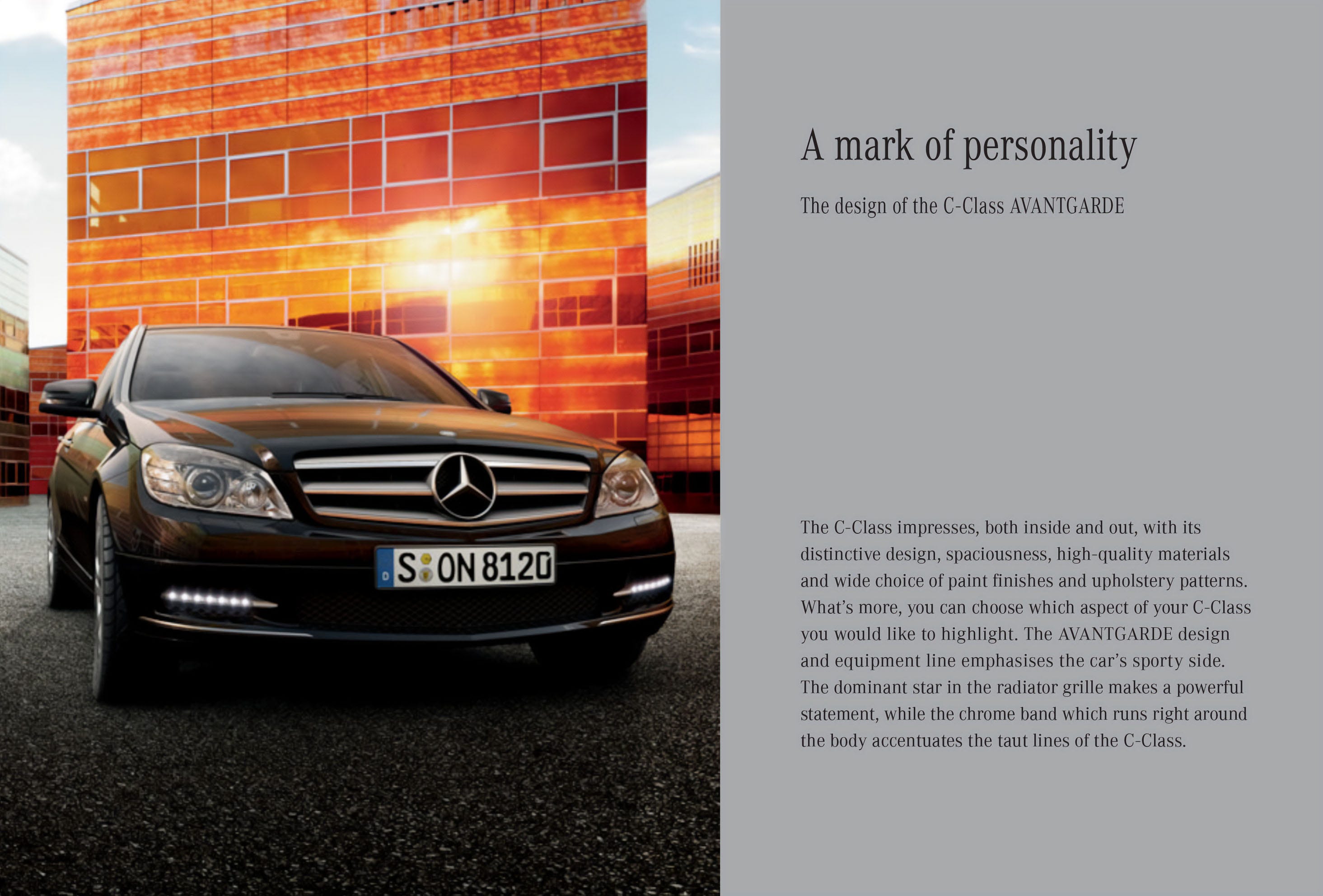
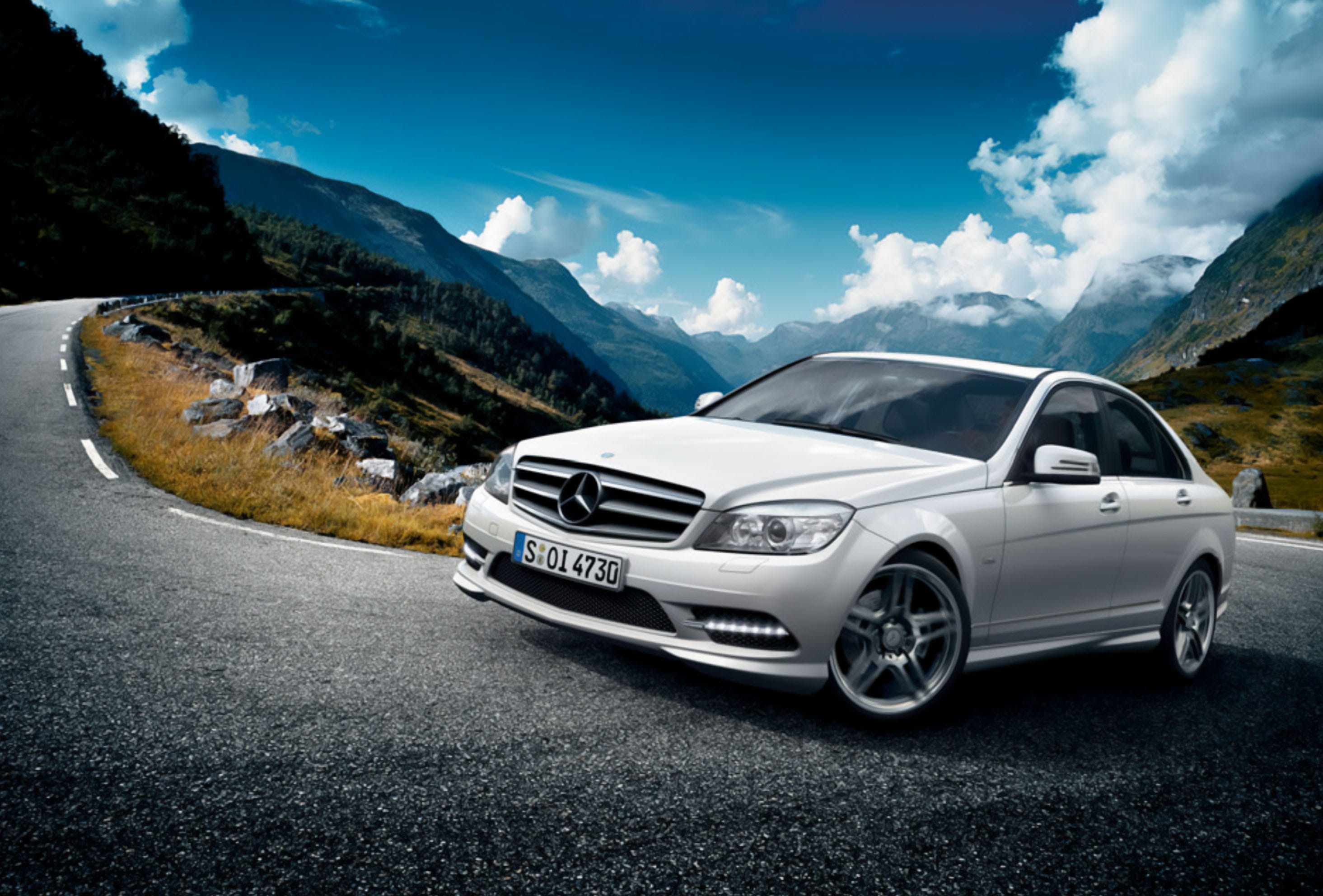
Then there was Avantgarde: the big integrated star, chrome bands emphasising those ‘taut lines,’ a more aggressive stance. This was the conquest face, the one aimed squarely at the BMW 3 Series buyer who’d never considered a Mercedes before. It said ‘I’m not my father’ in a way that was just subtle enough to avoid vulgarity.
The genius was in the honesty. Mercedes had stopped pretending its brand identity was some unified Teutonic monolith. They acknowledged that status signalling had fractured, and rather than force everyone through the same visual language, they gave you options. Remarkably civilised, really.
Solid on the Outside, Firm on the Inside
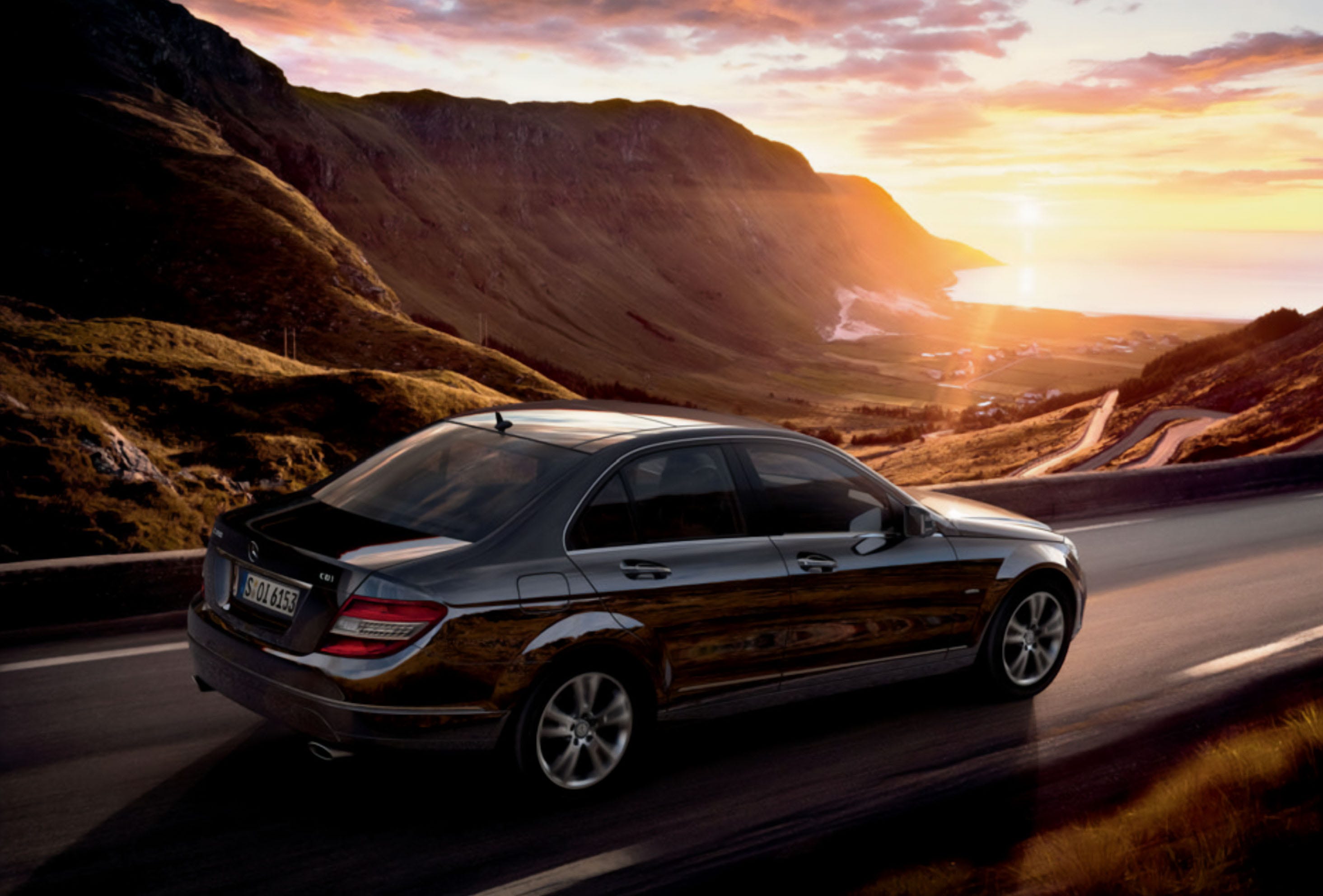
The marketing photography was pure theatre; all high-contrast chiaroscuro lighting designed to make the W204 look carved from a single billet of German steel. And in person, it worked. The body was taught where the W203 had been soft, angular where the previous car had been apologetic. That distinctive rear section, with its upright tail lamps and horizontal crease lines, gave the saloon a purposeful, almost martial bearing.
But the real achievement was underneath. This was proper engineering, the kind that doesn’t show up in brochure photography but reveals itself over thousands of miles.
Agility Control: Mechanical Intelligence
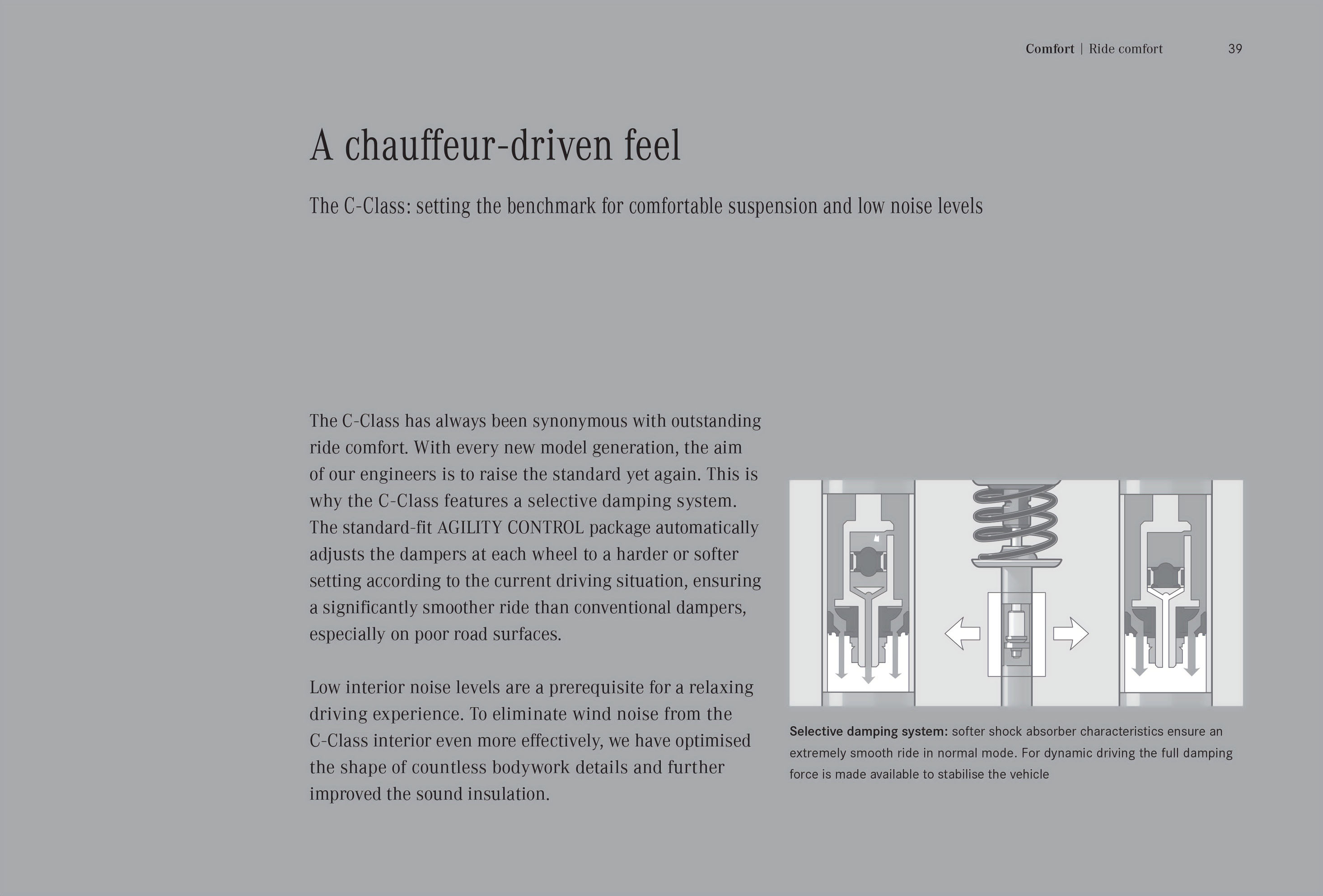
Before adaptive dampers became standard luxury equipment, Mercedes deployed selective damping as a kind of mechanical sorcery. Agility Control wasn’t electronic; no computers, no algorithms, just valves within the shock absorbers that responded to road inputs with hydraulic intelligence. Over rough surfaces, the damping softened to absorb the chaos. Under hard cornering, it firmed up to control body roll.
Drive a W204 with Agility Control back-to-back against a period 3 Series on passive dampers, and the Mercedes feels fundamentally more settled. It’s not softer or firmer, it’s just right. The car absorbs road surface irregularities you didn’t know were there. It’s the engineering equivalent of a reassuring hand on your shoulder.
The Cockpit: Buttons, Not Glass
Slide into a 2025 C-Class and you’re confronted with a portrait touchscreen the size of a small television. Everything requires menu-diving: climate control, drive modes, even the bloody seat heating. It’s an iPad that happens to have leather seats bolted around it.
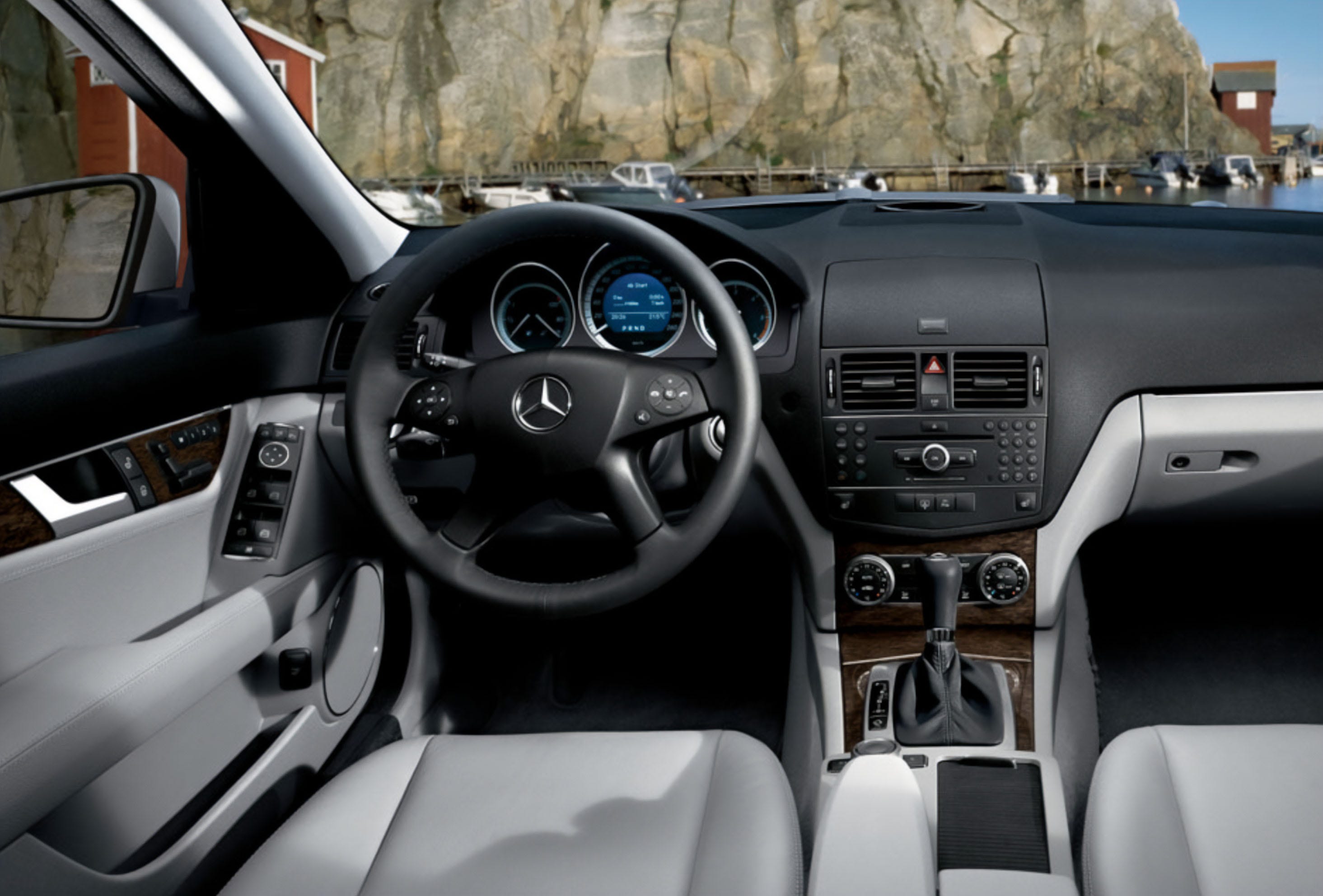
The W204 gives you three proper analogue dials (speedo, tacho, multi-information display) and below them, a tactical array of physical buttons. Want to adjust the temperature? Twist a dial. Heated seats? Press a switch. No sub-menus. No waiting for a screen to wake up. No haptic feedback pretending to be mechanical precision.
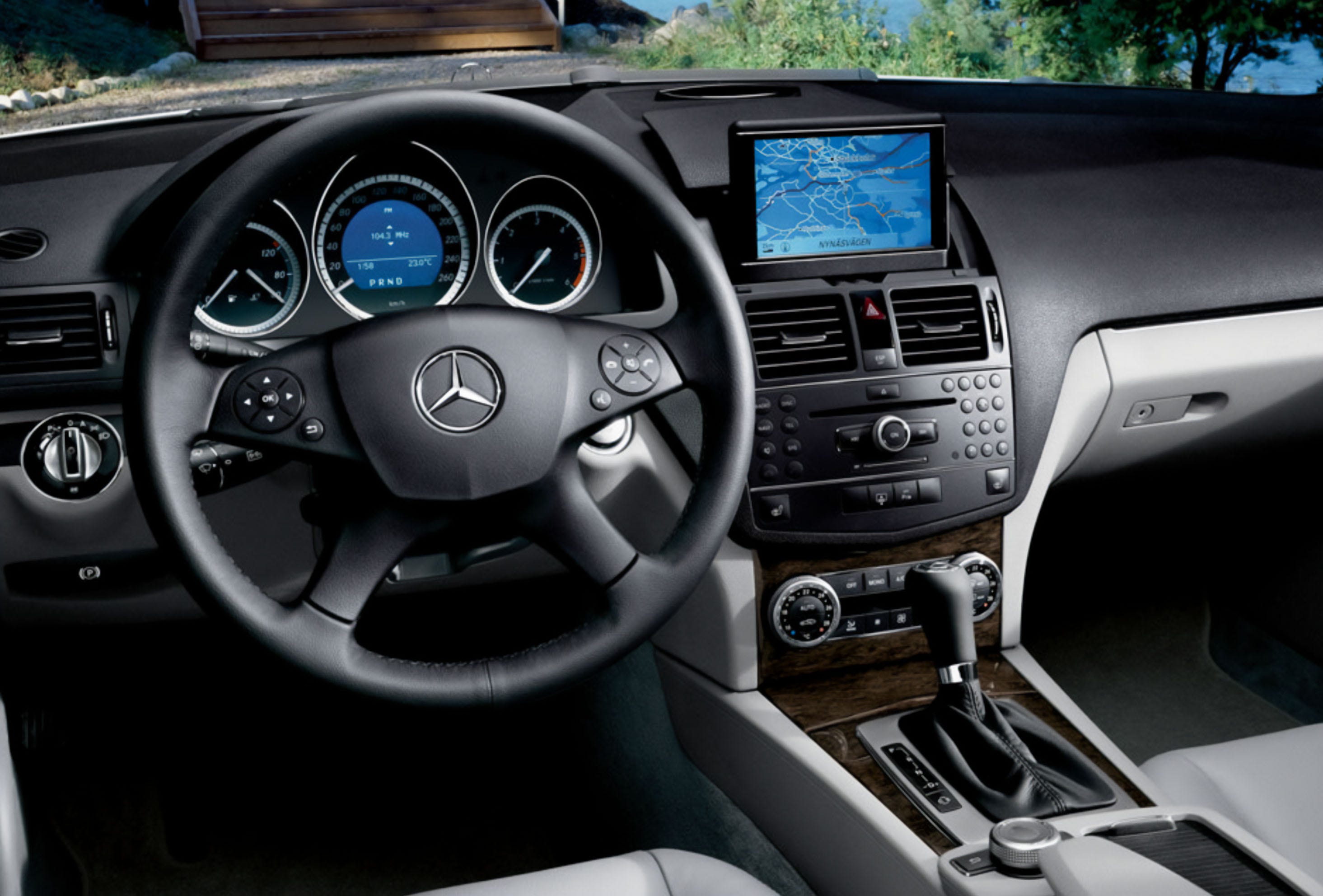
Even the COMAND APS system (at the time, peak luxury integration) now feels like mechanical jewellery. That 7-inch display physically pivots out from the dashboard. It’s a beautifully engineered piece of kit that does exactly what it’s supposed to do: audio, phone, navigation. No app store. No over-the-air updates. Just a tool that works, designed by people who understood that not everything needs to be ‘smart.’
From the vantage point of 2026, this feels positively radical. The W204’s interface requires almost no visual attention. You can adjust everything through muscle memory, through the satisfying click of a proper switch, through the weighted resistance of a quality dial. It’s interaction design that respects the primary task: driving.
The Powertrain Spread: Diesel Saints and AMG Sinners
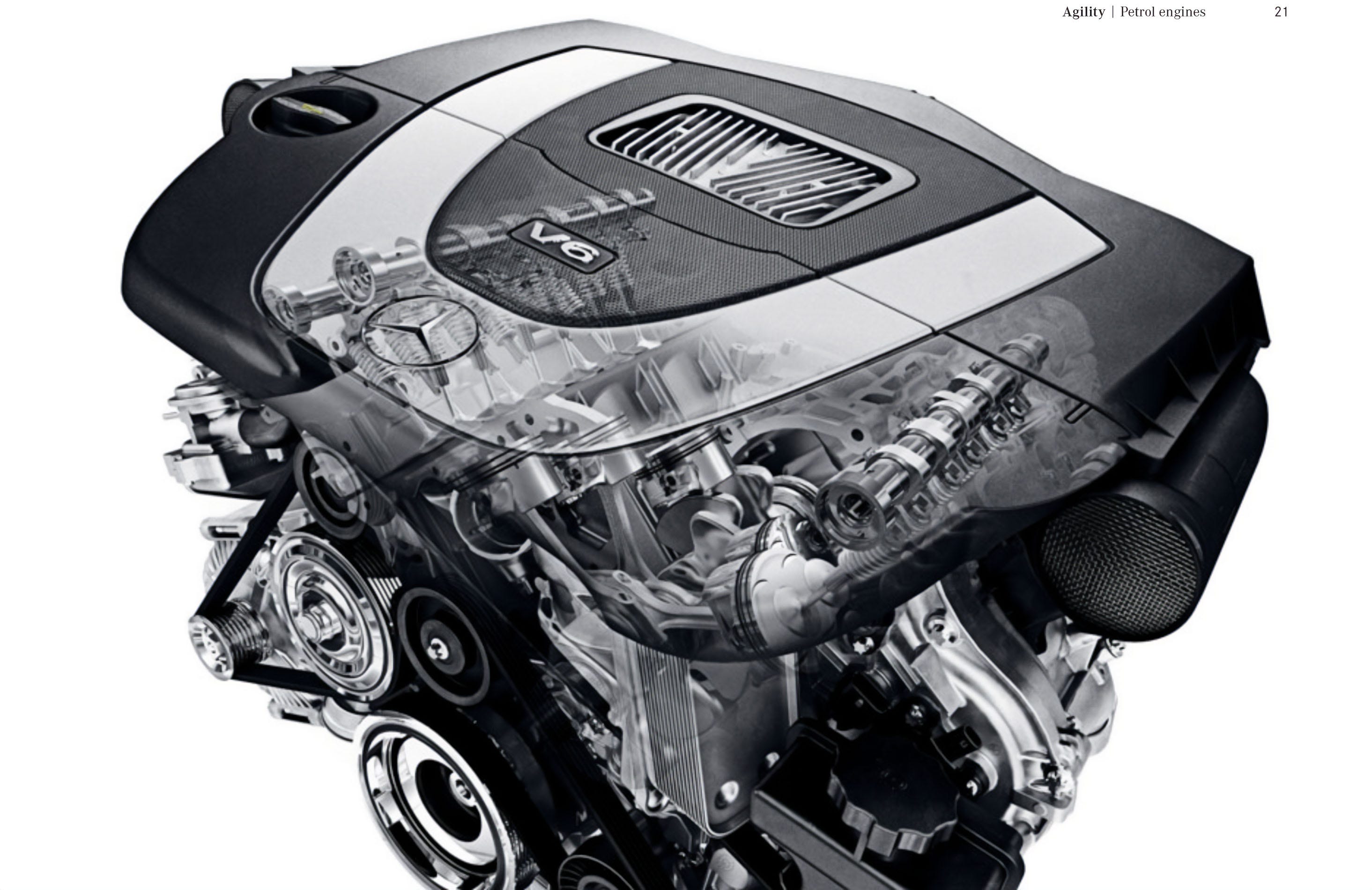
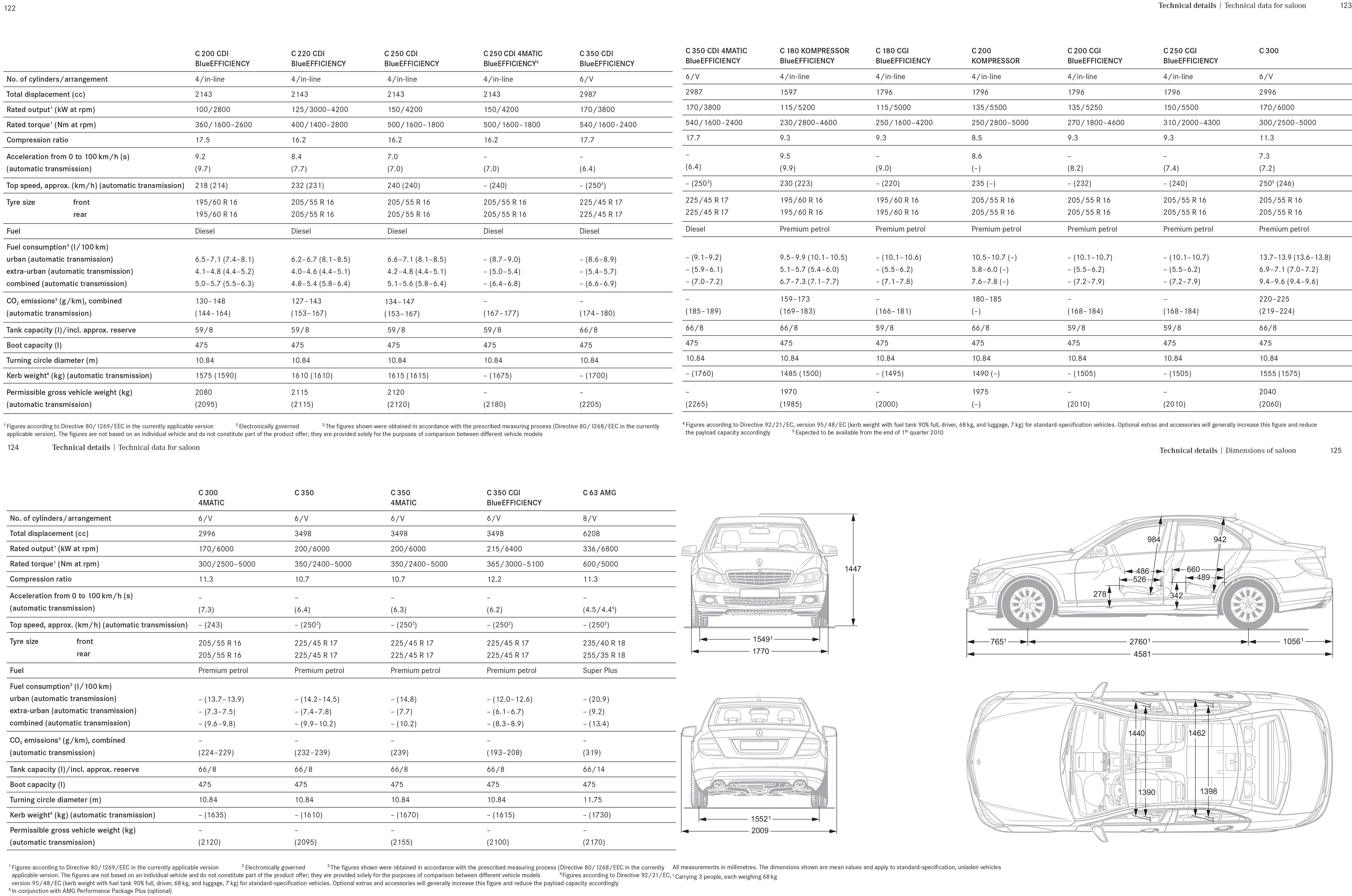
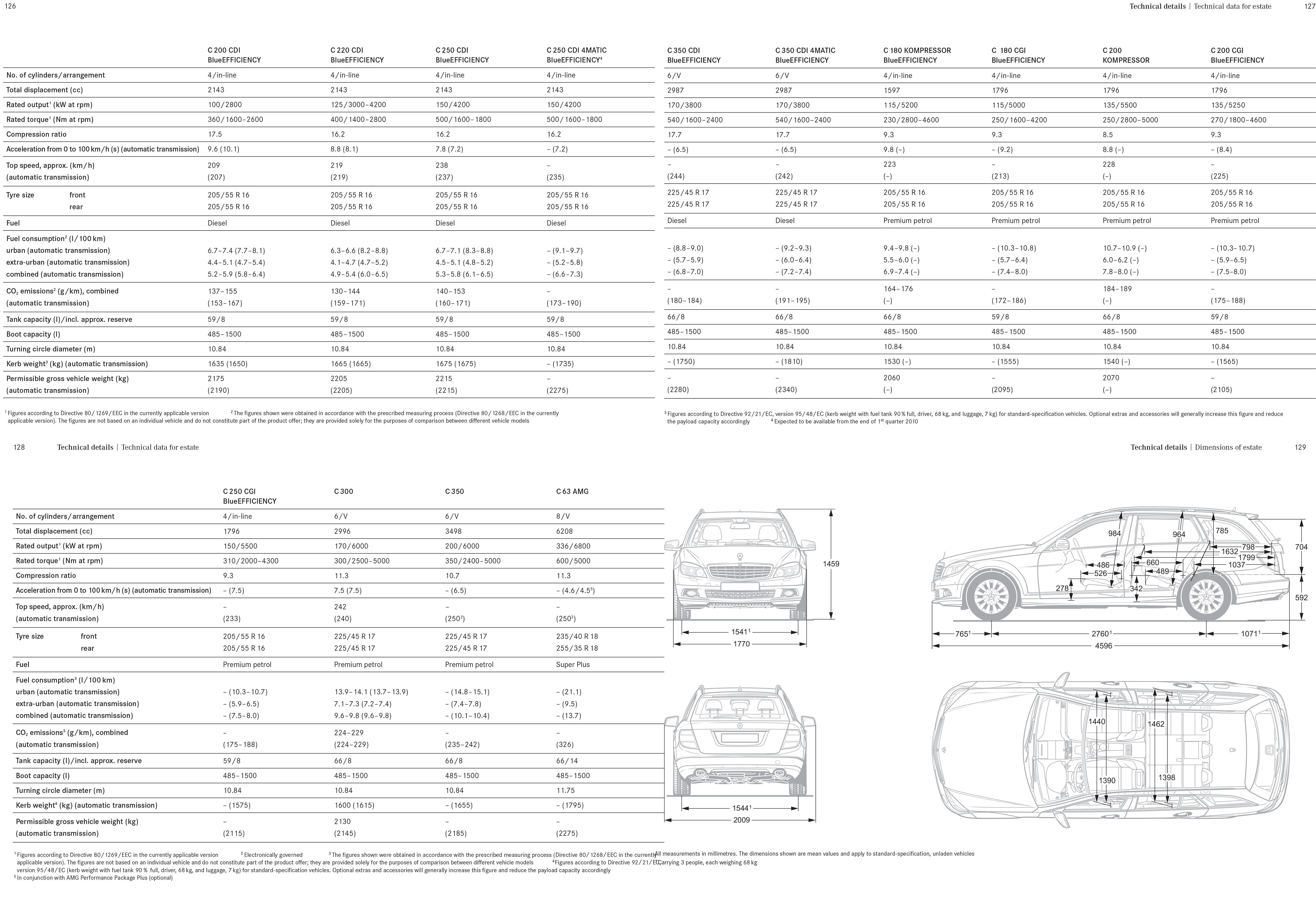
The W204 range spanned from sensible to certifiable. At the bottom, the diesel four-pots, particularly the OM651 engine in the 220 and 250 CDI, were intergalactic mile-munchers. These are the motors currently clocking 300,000 miles in the hands of taxi drivers who understand that regular oil changes and addressing the early Delphi injector recalls are the price of entry to diesel sainthood.
The V6 CGI engines represented Mercedes’ mastery of direct injection before downsizing became the industry religion. Steplessly variable valve timing, exemplary fuel efficiency for the era, and a refined power delivery that made the 350 CGI feel properly quick without resorting to forced induction theatrics.
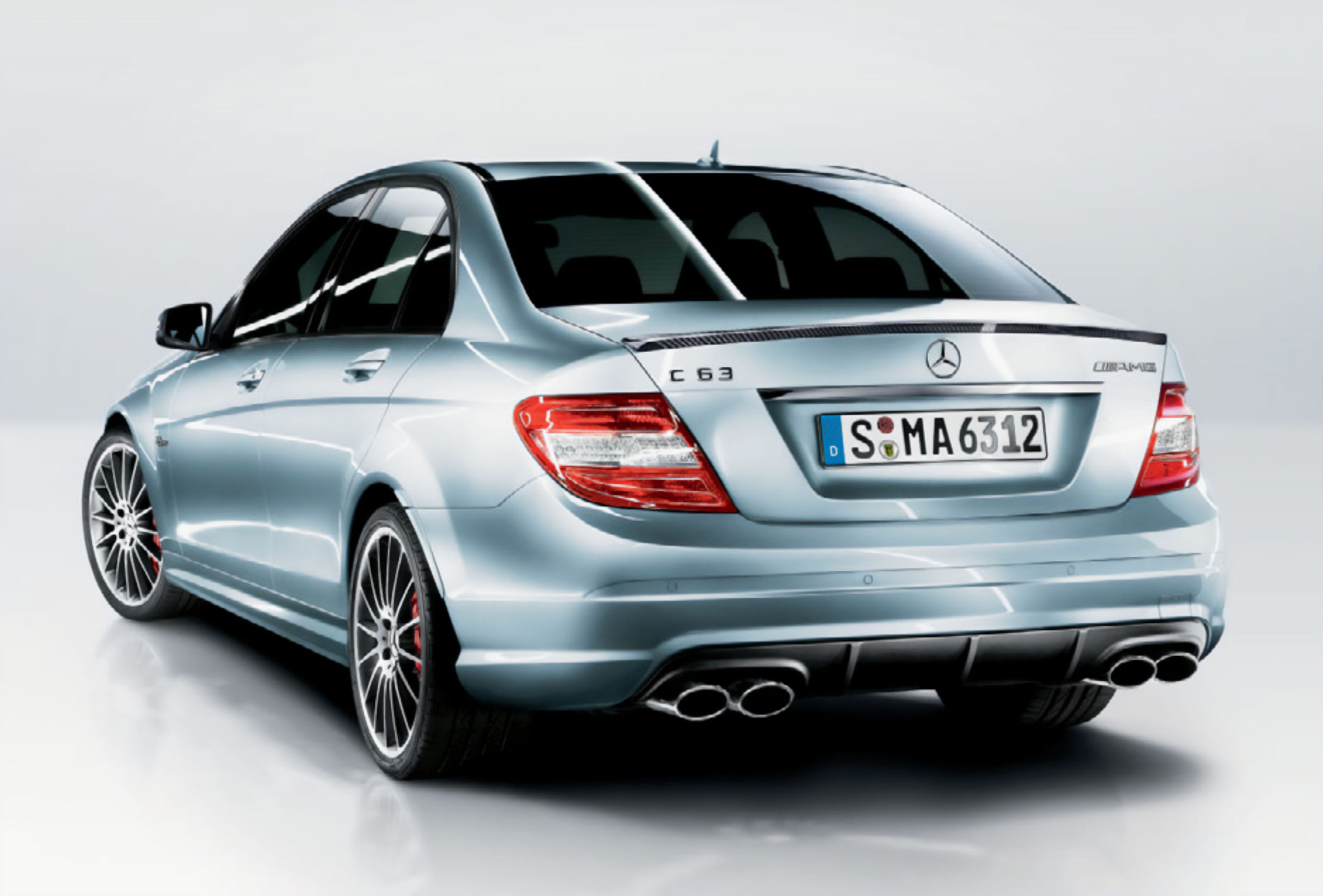
And then, crowning the range like a baroque cathedral at the end of a modernist housing estate, sat the C 63 AMG. Six-point-two litres of naturally aspirated V8 fury. 457 horsepower. Powerdomes bulging from the bonnet. Flared wheel arches barely containing the rubber. An exhaust note that could wake the dead three streets over.
This was AMG before they discovered turbos and restraint. It made no practical sense whatsoever, with fuel economy that would embarrass a lorry, rear tyres that lasted about as long as a decent holiday, but it didn’t need to. It existed as proof that even in an age of EU emissions regulations, AMG could still build a car that prioritised violence over virtue. God bless them for it.
The Rearview Mirror: A Contender for the Title
Twenty years on, the W204’s reputation has settled into something approaching mythology. Whether it’s the last proper Mercedes is debatable (the W212 E-Class makes an equally compelling claim) but it’s certainly a last proper Mercedes. One of the final iterations built before touchscreens and software updates became more important than how a door closes.
The build quality narrative has proven accurate. These cars aged significantly better than the W203 and, crucially, better than the early W205 that replaced them. The interior switchgear remains tactile and free of the creaking that plagues later MBUX-era cars. Dashboard materials have maintained their integrity rather than degrading into sticky residue. The whole car feels assembled rather than merely manufactured.
But mythology requires footnotes. The W204 has two Achilles heels that rather undermine the brochure’s proud declarations about ‘zinc phosphating’ and ‘long-lasting protection.’
First, the rear subframe corrosion scandal. UK-market cars have been dissolving from underneath, leading to a massive Mercedes recall and goodwill campaign between 2023-2025. Cars barely fifteen years old requiring entire rear subframes because the structural mounting points had turned to ferrous lace. The irony is surgical: the car marketed as a return to solidity developed structural cancer.
Second, those legendary OM651 diesels require proper maintenance to earn their reputations. Early Delphi injector recalls must be addressed. Timing chain stretch issues need sorting. Neglect these and the engine will self-destruct with Teutonic precision around 80,000 miles. It’s Schrödinger’s reliability: simultaneously bulletproof and fragile depending on service history.
Qualifications notwithstanding, the W204 occupies genuine historical significance. It represents one of the final moments when Mercedes prioritised mechanical substance over digital abstraction. One of the last Mercedes where you controlled the car through springs and dampers and hydraulic circuits rather than through algorithms and drive modes.
Drive one back-to-back with a current C-Class and the philosophical gulf is staggering. The modern car is objectively superior in every measurable way: faster, more efficient, safer, bristling with technology. But it feels mediated. Every input is interpreted by software before execution. The steering lacks mechanical connection. The throttle response is filtered through economy algorithms.
The W204 feels direct. There’s a hydraulic link between your hands and the front wheels. The throttle (in earlier models) is still a cable. The suspension communicates road texture without software intermediaries. It demands more from you; more attention, more involvement, more skill. And that demand feels increasingly precious.
Whether this makes it the last proper Mercedes is, admittedly, open to interpretation. The W212 E-Class (2009-2016) shares much of the same engineering ethos: physical buttons, hydraulic steering feel in early models, that same sense of mechanical solidity before the MBUX revolution. Perhaps it’s more accurate to say the W204 and W212 represent the final generation of the Old Mercedes, the last time Stuttgart built cars that spoke the language of Mechanik rather than Software.
The W204 was marketed as Stuttgart’s apology, but it reads better as a milestone. It marked one of the final chapters of an era when luxury meant mechanical sophistication rather than software updates, when credibility came from the feel of a proper switch rather than the resolution of a touchscreen.
The split-face strategy acknowledged that Mercedes’ customer base had fractured. Rather than force everyone through the same visual language, they offered choice. It was remarkably honest: here’s tradition if you want it, here’s aggression if that’s your preference, and underneath both of them is the same properly sorted chassis.
The engineering (Agility Control’s hydraulic intelligence, 4MATIC’s all-weather paranoia, Béla Barényi’s ghost haunting the safety cell) represented Mercedes at peak form. Comfort through mechanical sophistication. Safety through structural obsession. Performance through relentless detail work.
Today, on the used market, the W204 exists as both transport and cultural artefact. It’s one of the last Mercedes you can understand with mechanical knowledge rather than software diagnostics. One of the final iterations where a button is an actual switch rather than a capacitive suggestion. The rear subframe issues and timing chain dramas remind us that even tanks have vulnerabilities. But compared to the software-dependent obsolescence of modern luxury cars, the W204’s mechanical failures feel refreshingly fixable.
That three-in-the-morning moment on a rain-slicked dual carriageway, when you realise the car is properly sorted? The W204 still delivers it. Whether it’s the absolute last proper Mercedes or merely one of the last doesn’t really matter. Twenty years on, it remains a bloody good car. And in the current landscape of portrait touchscreens and haptic feedback, that’s achievement enough.
The Fine Print