The Palace on Wheels: Citroën C6 and the Independent Mind
When France Built a Flagship That Chose Silence Over Speed

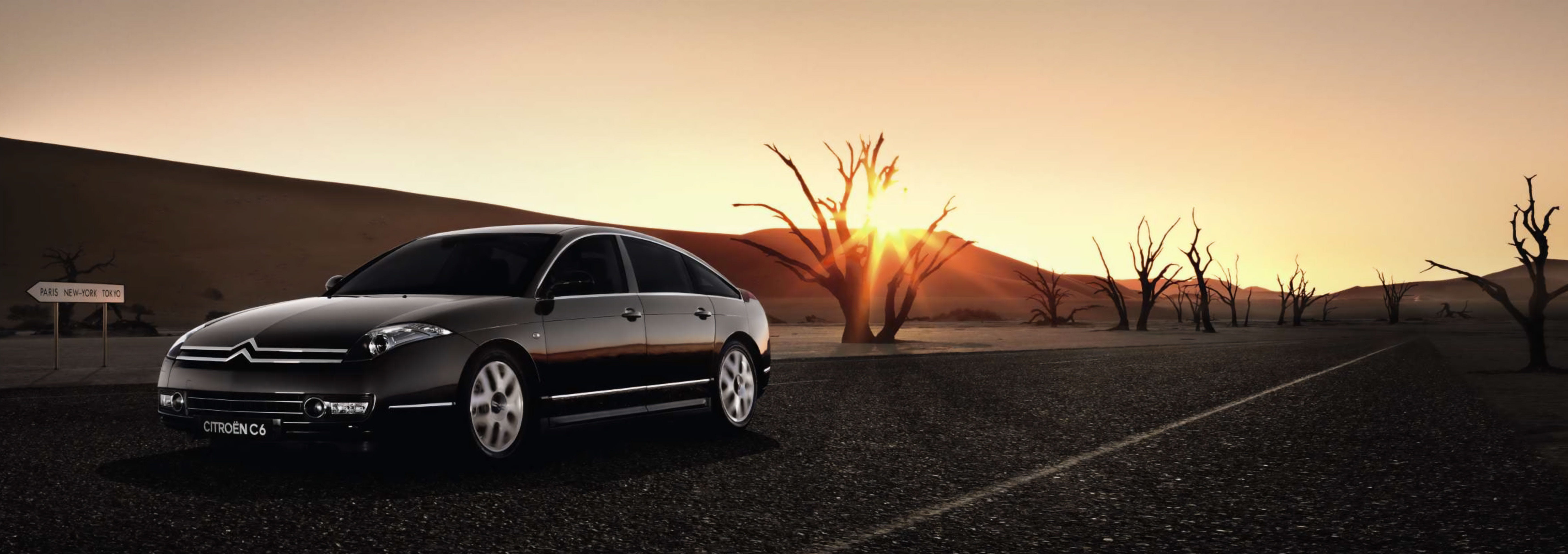
There are cars built to win by following the script, and then there are cars that write their own. In August 2006, Citroën delivered a 44-page document to British dealerships that read less like automotive marketing and more like an architectural manifesto. Printed on heavy matte stock with elegant, thin sans-serif typography, it introduced the C6: not as a rival to the BMW 5 Series, but as a Coupe-Limousine for the Independent Mind.

The C6 was Citroën’s final, magnificent attempt to manipulate physics in service of refinement. It was a car for those who prized poise over pace and cocoon over conquest. The brochure made no apologies for this, framing the car’s controversial concave rear glass and long overhangs as sculptural elements rather than aerodynamic compromises.
The Invisible Butler
The central proposition of the C6 was radical: technology as silence. Every system existed to vanish into service. The Hydractive III+ suspension, detailed in the brochure with a descent into engineering white-paper territory, could adjust its dampers up to 400 times per second. Not per minute. Per second. A frequency bordering on the neurological: constantly seeking the equilibrium between comfort and control that conventional springs could never achieve.

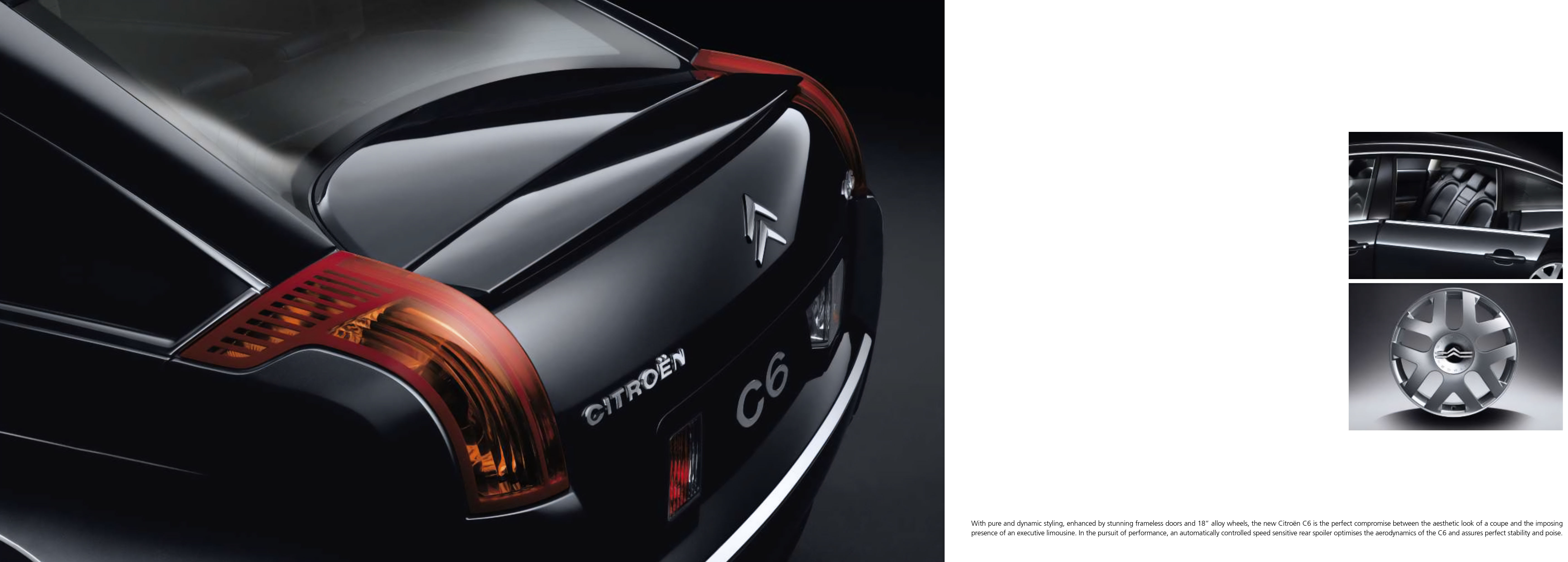
But the true pyrotechnic theatre was the Active Bonnet. Page 35 depicts it in dramatic low-angle photography, explaining how a mechanism raises the rear of the bonnet by 65mm in just 40 milliseconds to cushion pedestrians. Accelerometers in the front bumper distinguished between a pedestrian strike and a minor parking scrape, then fired a small explosive charge to create a crumple zone between the engine and the unfortunate human. Here was safety sold through the language of military-grade reaction time mathematics: a calculated appeal to the analytical mind.
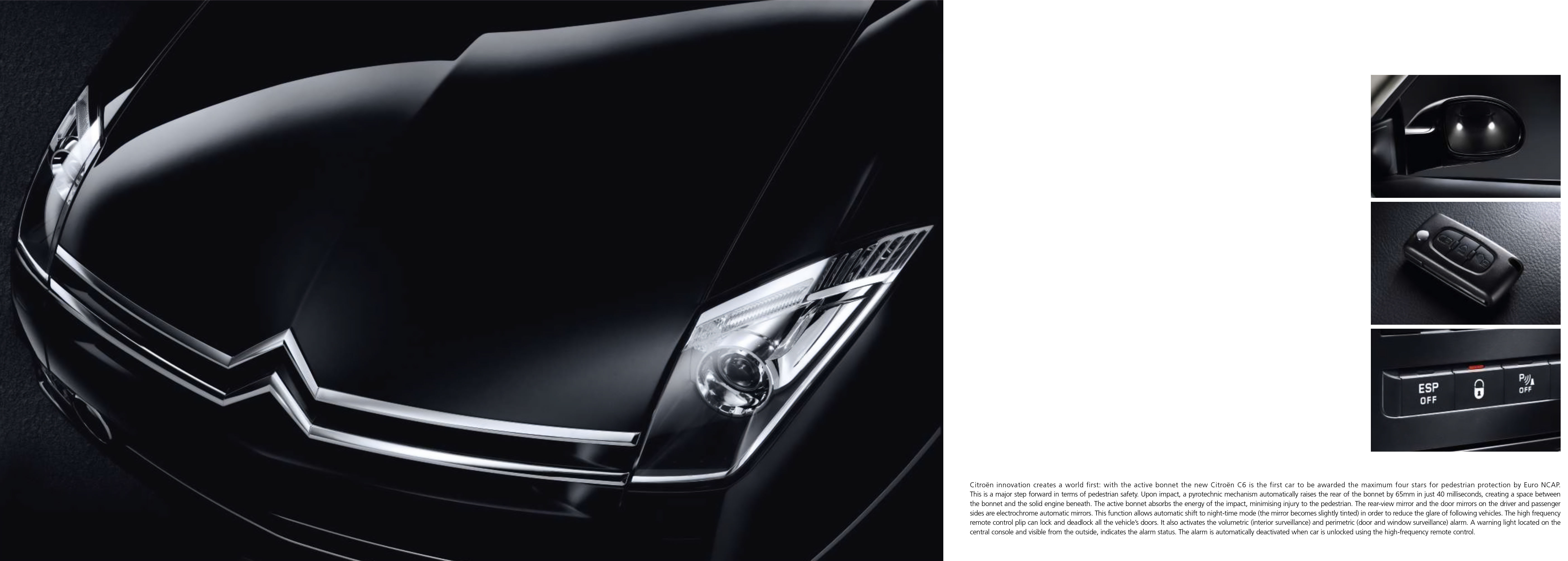
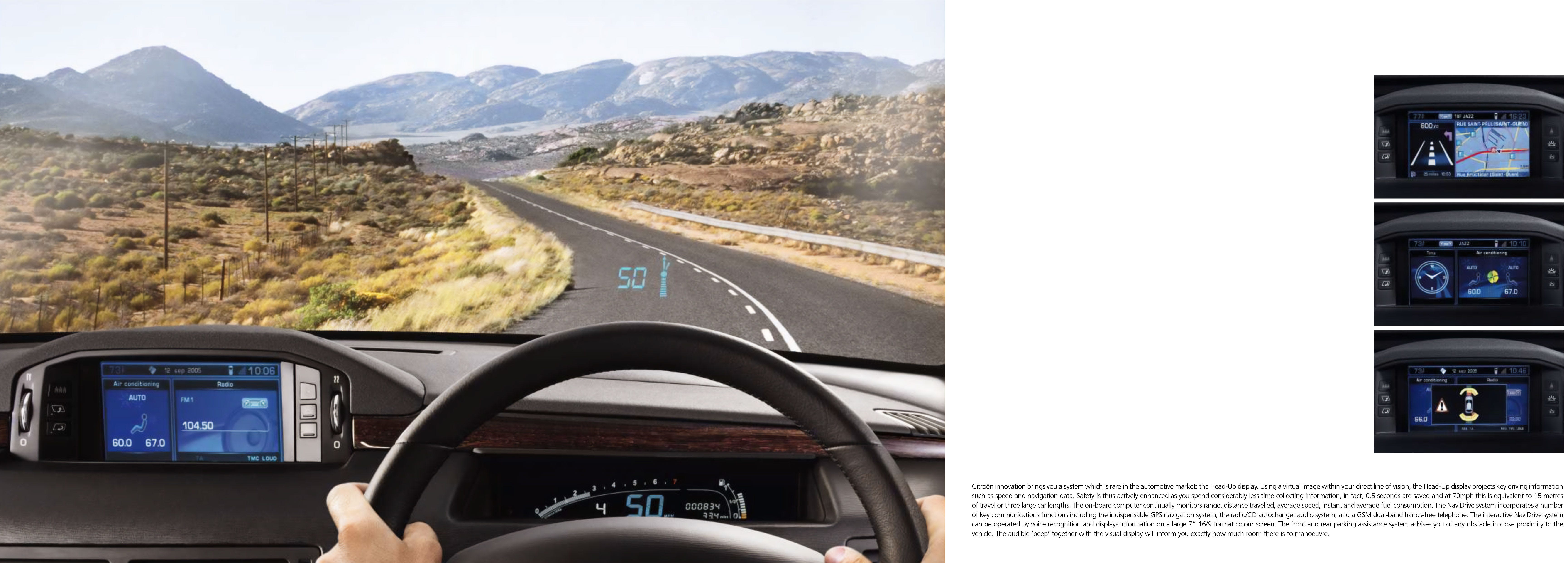
The head-up display projected speed and navigation data directly into the driver's line of sight, saving 0.5 seconds of reaction time—which at 70mph equated to 15 metres, or three car lengths. Safety sold through mathematics.
The Lane Departure Warning System was equally clever. Above 50mph, infrared sensors detected white line crossings. If the car drifted, a vibrating device in the seat base alerted the driver on the side corresponding to the direction of drift. Not a beep. Not a chime. A vibration: tactile, visceral, impossible to ignore.
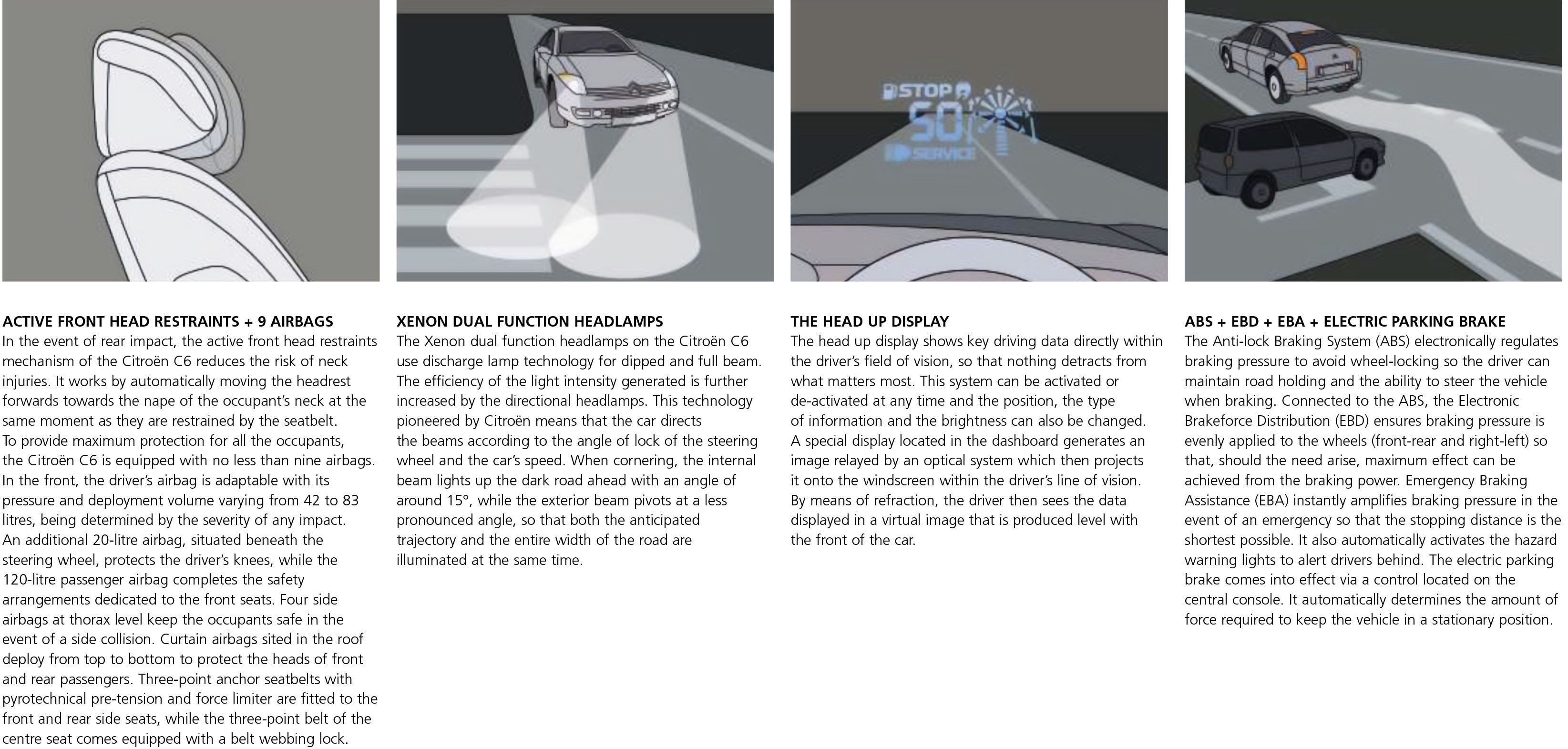
The directional Xenon headlamps pivoted up to 15 degrees, anticipating your trajectory and illuminating the apex before you reached it. The effect was eerie: like the car was reading your mind.
The Presidential Quarters
Inside, the C6 abandoned the cockpit aesthetic for the Parisian Study. Page 28 showcases Mukonto wood and half-moon door panels, treated not as automotive trim but as fine cabinetry. The “Lounge Pack” described on Page 29 was the true revelation, allowing the rear passenger to adjust the front seat forward to create approximately one metre of legroom.
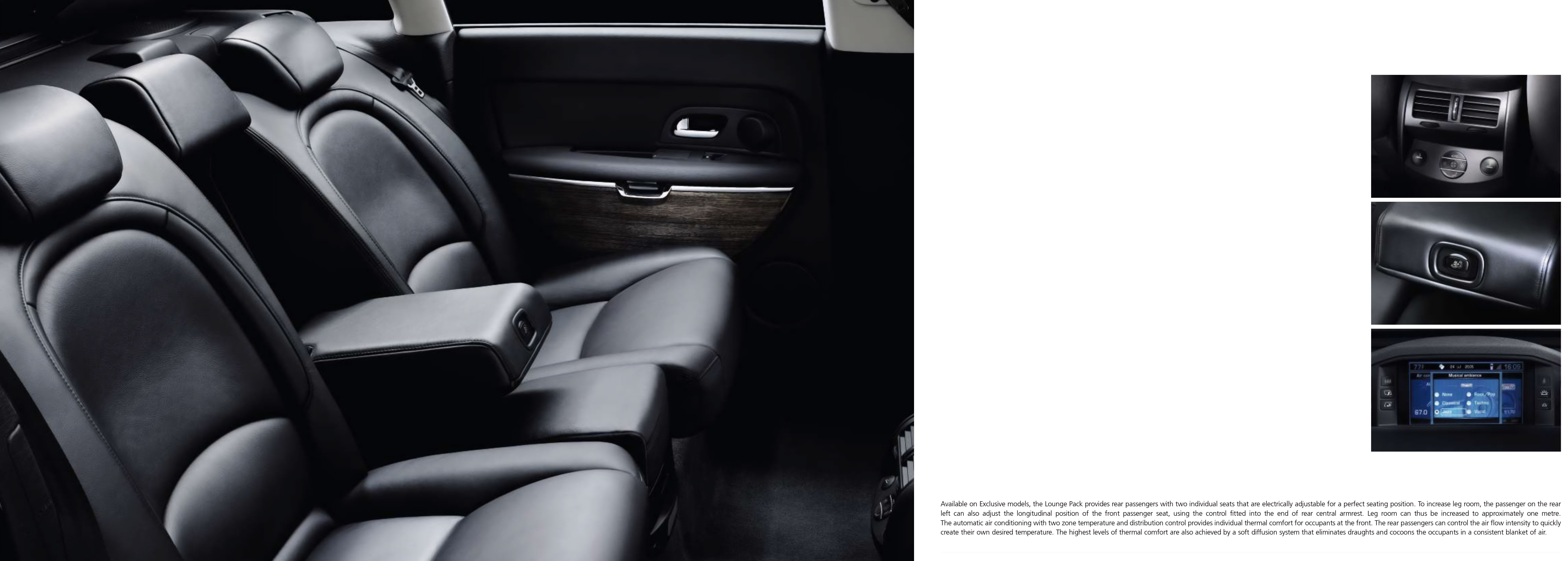
This was the Presidential Page. The C6 understood hierarchy: the driver was staff; the rear seat was an office for the executive, the thinker, the reader.
The Rearview Mirror: A 2026 Reckoning
The Design Bravery: Vindicated by History
The market rendered its verdict: 23,300 units over seven years. Executive buyers simply would not trade a BMW roundel for a Double Chevron, dismissively calling it “a French car at a German price”. Yet, in 2026, history has reconsidered the C6. It stands as a testament to design bravery: the last Citroën to feature a true hydraulic suspension before the brand succumbed to conventional springs.
The Ownership Pact: Modernist Maintenance
To own a C6 today is to enter a Thinking Man’s pact. The car’s 1.8-ton weight punishes the front ball joints, and the 2.7 HDi’s coolant pipes are notoriously prone to corrosion. The signature concave rear glass is now virtually extinct in salvage yards, requiring patience and European specialists to source. The Hydractive suspension (those nitrogen spheres that adjusted 400 times per second) can degrade and leak. Museums don’t leak hydraulic fluid, but the C6 does, and that’s what keeps it honest. It was a labour of love in 2006; it remains one today.
The Last Flagship
The August 2006 brochure survives as primary evidence of an era when refinement was engineered and silence was a selling point. The document never used the word “quirky”; it spoke of cocoons and filtration. It remains a 44-page monument to the car that tried to build a French palace on wheels and proved that for the Independent Mind, the destination was always secondary to the tranquility of the journey.
The Fine Print